
 h
hAre Outdoor Porcelain Pavers the Best Outdoor Flooring for Okanagan Homes?
August 11, 2026Outdoor living in the Okanagan is not limited to setting a few chairs on the patio. For many homeowners, the space outside the back door has become a second kitchen, dining room and entertaining area.
That creates a practical question: what should go under all of it?
Outdoor porcelain pavers have become an increasingly appealing option for patios, decks, terraces and outdoor kitchens. They offer the clean appearance of indoor tile in a format designed to handle exterior conditions. But are they the best outdoor flooring for every Okanagan property?
Often, yes. The product, installation system and intended use still need to be right.
Are outdoor porcelain pavers a good choice?
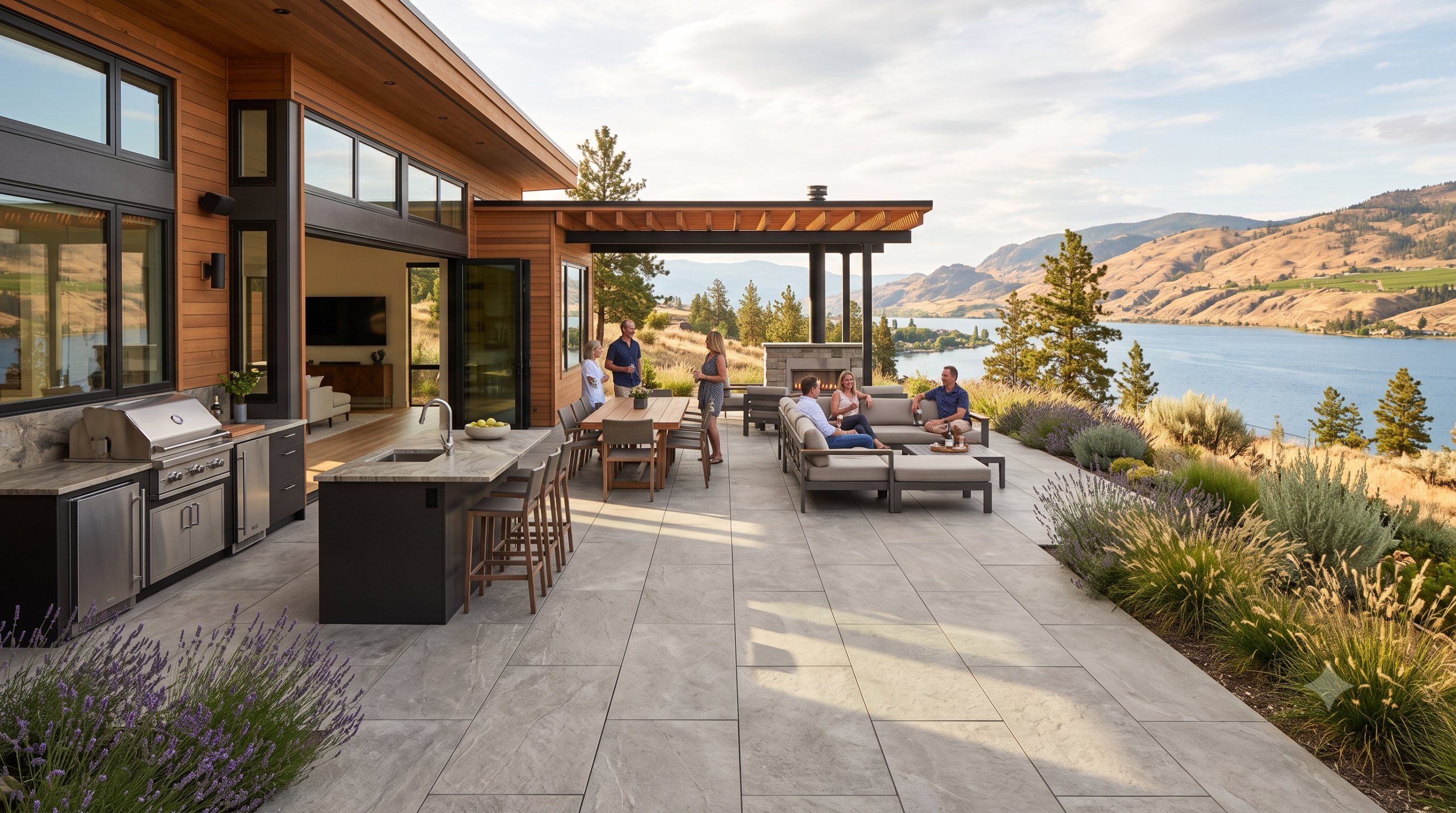
Outdoor porcelain pavers are one of the best flooring options for many Okanagan patios, decks and outdoor kitchens because they combine low water absorption, durability, design flexibility and relatively simple maintenance.
However, not every tile labelled “porcelain” belongs outdoors. The paver must be specifically rated for exterior use, and the installation must address drainage, temperature changes, substrate conditions and slip resistance.
In other words, a beautiful paver is only half the decision. What happens beneath it matters just as much.
Why Okanagan outdoor flooring has a difficult job
An outdoor floor in the Okanagan needs to perform through hot, sunny summers, winter temperatures below freezing, snow, rain and substantial seasonal temperature changes. Kelowna’s 1991–2020 climate normals show an average July daytime high of 28.5°C and a January average of -2.6°C, so exterior materials must be selected with both heat and freezing conditions in mind.
Outdoor flooring may also need to handle:
- Water dripping from a pool or hot tub
- Cooking spills around an outdoor kitchen
- Patio furniture being moved across the surface
- Snow clearing and seasonal maintenance
- Heavy traffic at a restaurant, winery or multi-unit property
- Direct sun and exposed weather
- Changes in the structure or substrate below
This is why choosing outdoor flooring based only on colour can go sideways rather quickly. The stone-look finish may be lovely, but it will not rescue an installation with poor drainage.
What are outdoor porcelain pavers?
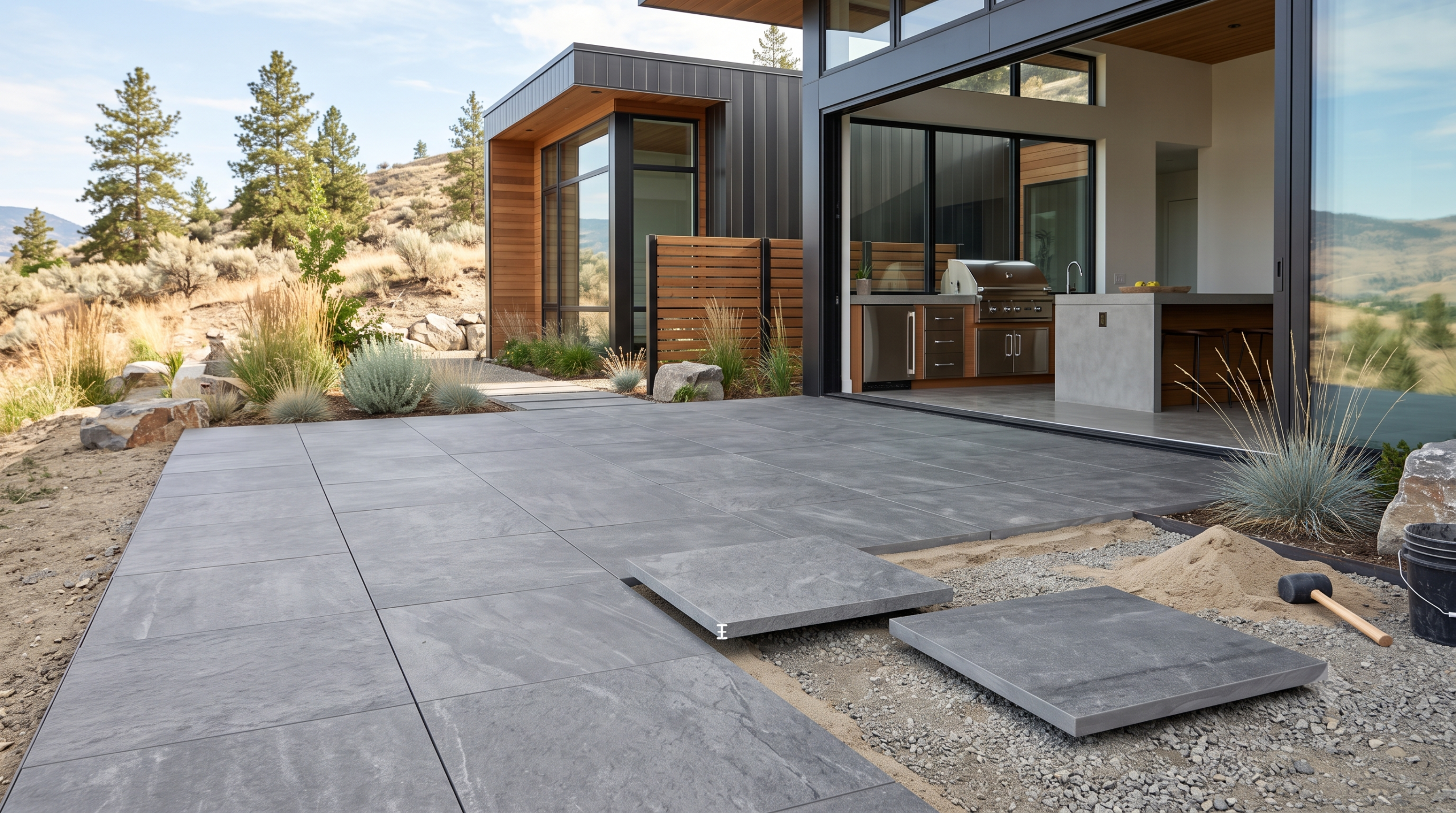
Outdoor porcelain pavers are dense, manufactured slabs designed for exterior walking surfaces such as patios, terraces, decks, walkways and outdoor kitchens.
Porcelain is defined as tile with a water-absorption rate of 0.5% or less. That low absorption can make it well suited to wet and freezing environments, but it does not automatically make every porcelain product frost-resistant or suitable for outdoor installation. The manufacturer must specifically rate the product for the intended exterior use.
Many exterior pavers are approximately 2 cm thick, which makes them more substantial than conventional interior floor tile. Depending on the product and project, they may be installed using an exterior-rated bonded assembly or supported on a raised paver system.
A 2 cm paver should not be confused with ordinary indoor tile that happens to look good beside a patio door.
Why outdoor porcelain pavers work well in the Okanagan
They absorb very little water
Low water absorption is one of porcelain’s most relevant characteristics for outdoor use. Less absorbed moisture means less water within the paver itself when temperatures drop.
That does not make the entire floor waterproof. Water can still move through joints or reach the layers beneath the finished surface. Proper slope, drainage, waterproofing and installation materials remain essential. The Tile Council of North America notes that successful exterior tile systems must move water away before it saturates the tile assembly, particularly in freeze-thaw and high-temperature conditions.
They provide strong design flexibility
Porcelain pavers can recreate the appearance of limestone, slate, concrete, travertine and wood without requiring homeowners to use those exact materials.
This makes it possible to coordinate an exterior floor with:
- Interior tile
- Exterior stonework
- Kitchen counters and cabinetry
- Pool surrounds
- Contemporary or traditional architecture
- Commercial branding and landscape design
Large-format pavers can create an especially clean, modern look with fewer visible joints. For homeowners trying to make the patio feel like an intentional extension of the house, rather than the place where the old furniture retires, that visual continuity matters.
They are practical around outdoor kitchens
Outdoor kitchens expose flooring to grease, food, drinks, furniture and frequent foot traffic. Porcelain provides a hard surface that is generally straightforward to clean when the correct exterior product and finish are selected.
The finish matters. A highly polished surface may look impressive in a sample display but may not be the sensible choice near water, cooking areas or stairs. Ask about the product’s intended use and slip-resistance information rather than relying on texture alone.
They can work with raised paver systems
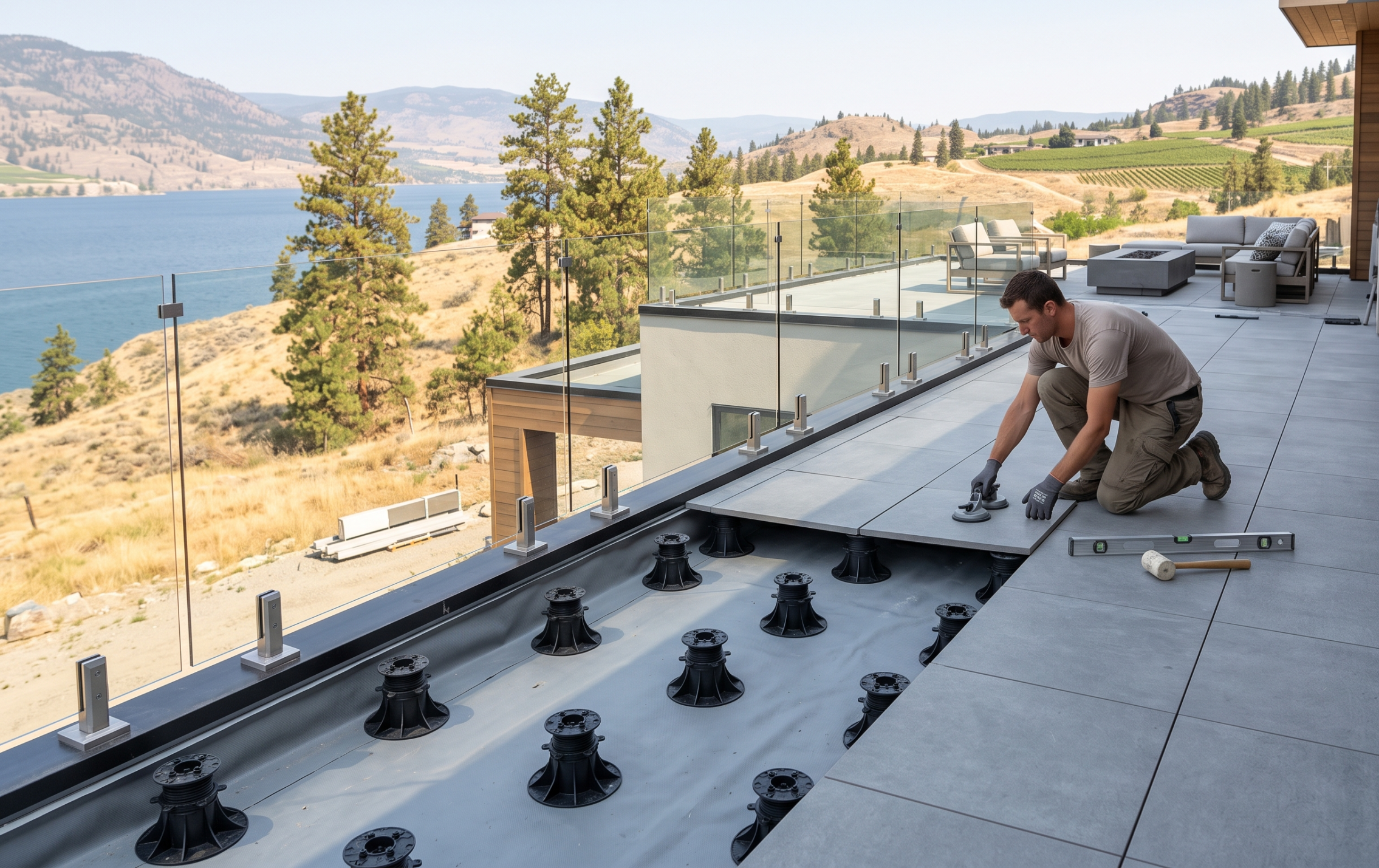
For certain decks and terraces, 2 cm porcelain pavers can be placed on a pedestal or paver-support system above a suitable substrate.
In this type of installation, the pavers are supported rather than permanently bonded to the surface below. The open space beneath them can allow water to drain, provide ventilation and preserve access to waterproofing, drainage components or utilities. Adjustable supports can also help create a level finished surface above a properly sloped substrate.
Not every property needs a pedestal system, but it can be a valuable option for builders, designers and owners working on decks, rooftop terraces or more complex outdoor spaces.
Where can porcelain pavers be used?
Depending on the specific product and installation method, outdoor porcelain pavers may be considered for:
Patios and entertaining areas
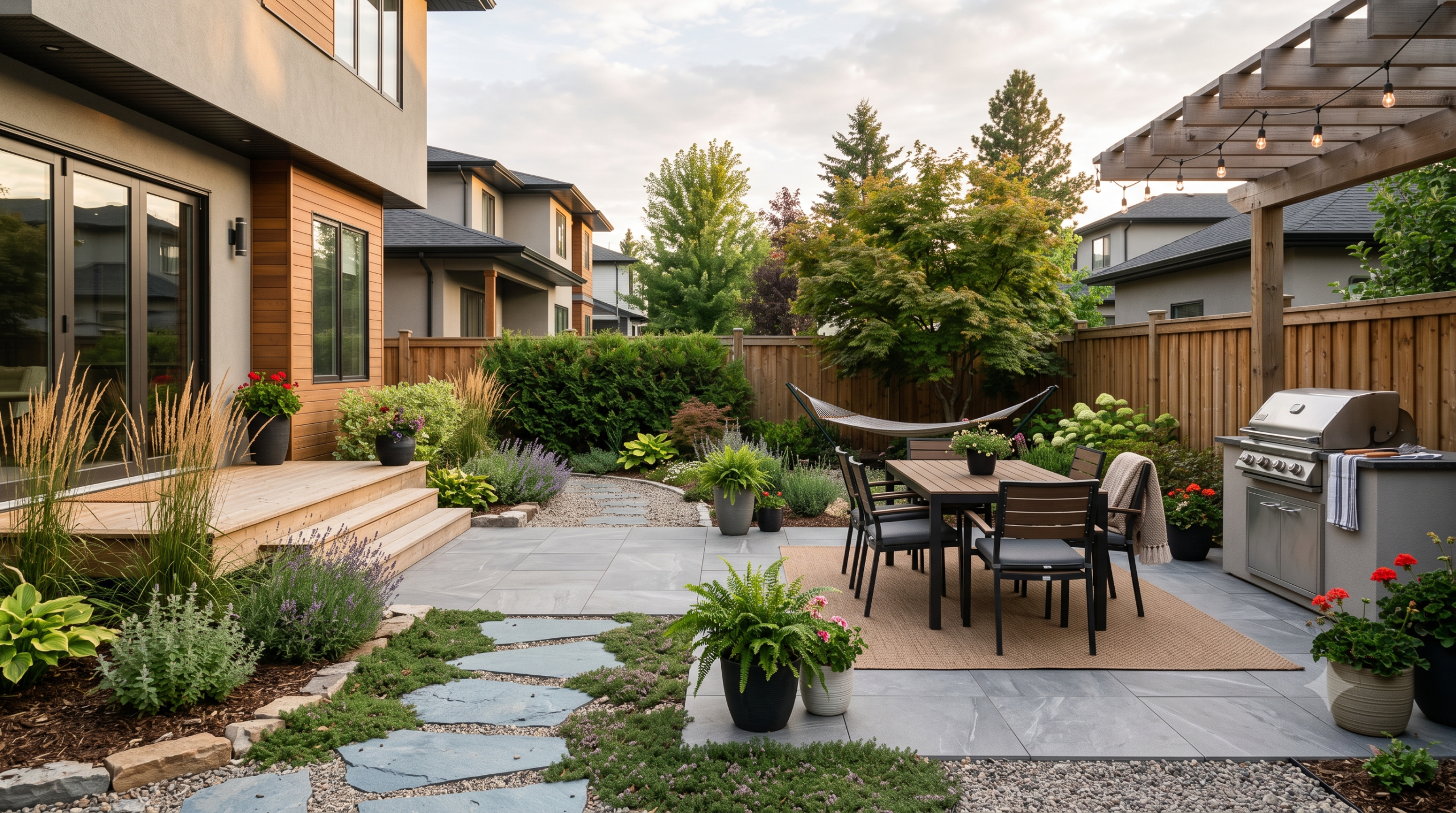
Porcelain can give a backyard patio a finished, architectural look while providing a practical surface for dining furniture, planters and everyday traffic.
Outdoor kitchens
A durable, cleanable surface makes sense beneath barbecues, counters, dining areas and cooking equipment. Layout decisions should account for cabinets, drainage, movement joints and the location of permanent fixtures before installation begins.
Decks and terraces
Thicker pavers installed on an appropriate support system can create a modern deck surface while allowing water to drain below. The underlying structure must still be suitable for the system and expected loads.
Pool and hot-tub areas
Porcelain may work well around water, but the exact surface texture and slip rating require careful attention. “Outdoor-rated” and “appropriate for a frequently wet pool surround” are not always identical specifications.
Outdoor stairs
Porcelain can be used in certain stair applications when the paver, edge treatment and installation system are designed for the purpose. Stair nosings, visible edges, drainage and traction all need to be planned rather than improvised after the main floor has been installed.
Commercial outdoor spaces
Restaurants, wineries, retail properties, multi-family developments and hospitality projects may use porcelain pavers to create a consistent, high-end exterior surface. Commercial projects should consider traffic levels, accessibility, maintenance procedures and expected loads when selecting the product.
When might porcelain pavers not be the best choice?
Porcelain pavers are strong contenders, not magic rectangles.
They may not be the right choice when:
- The project budget does not allow for the necessary preparation and professional installation
- The existing deck or substrate cannot support the proposed system
- Drainage or waterproofing problems must be corrected first
- The homeowner wants the softness and natural weathering of real wood
- The selected product is not rated for exterior or freeze-thaw conditions
- A suitable stair edge, transition or perimeter detail is unavailable
- The surface finish is inappropriate for wet or snowy conditions
Porcelain can also feel firm and cool underfoot compared with wood decking. Some homeowners consider that a benefit during an Okanagan summer. Others want a softer, warmer material. The best choice depends on how the area will actually be used.
How to choose outdoor porcelain pavers
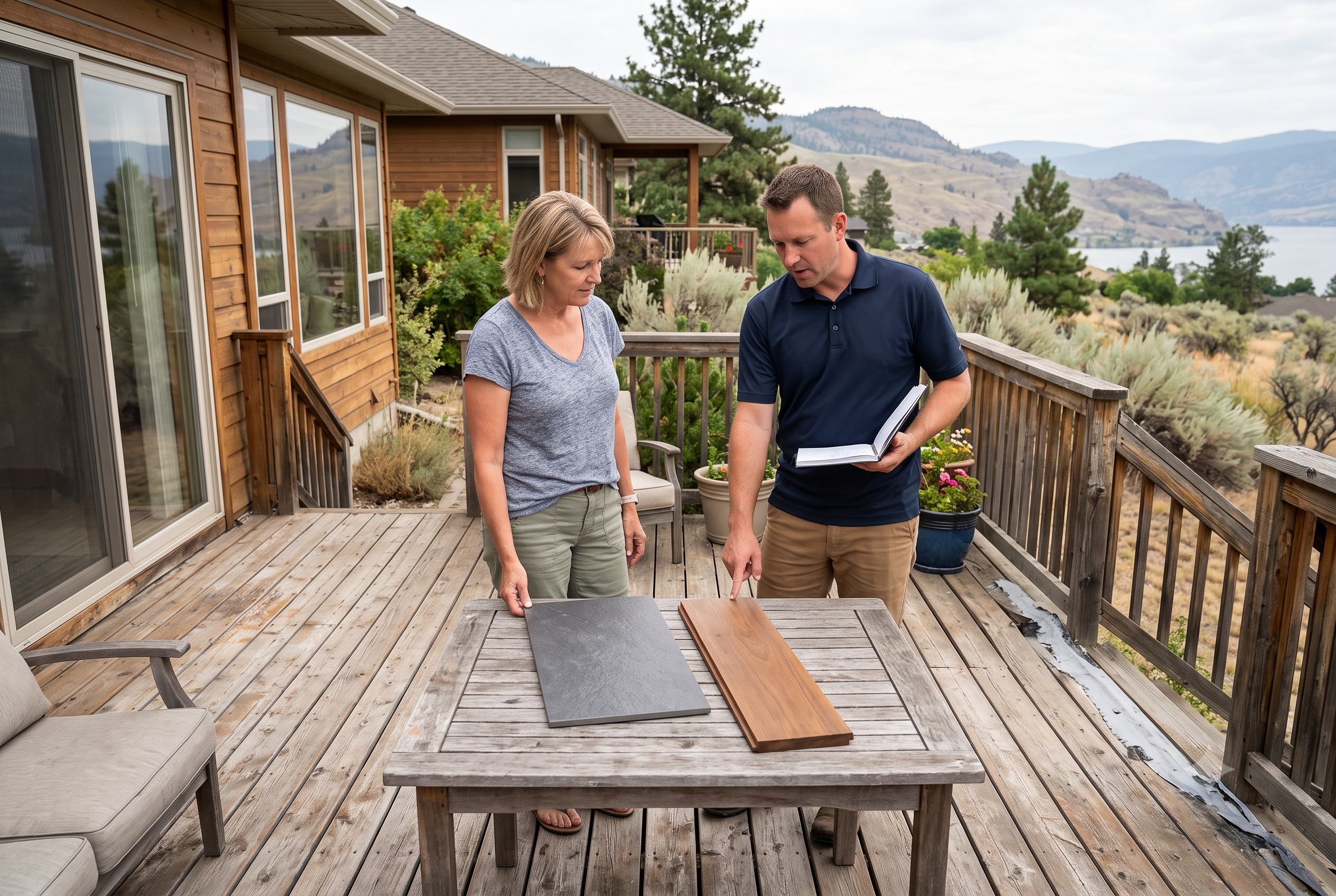
Before choosing a colour, ask these questions:
- Is the product specifically rated for exterior use?
Do not assume that every porcelain tile can go outdoors. - Is it suitable for the local freeze-thaw environment?
Review the manufacturer’s technical information for the exact product. - What happens when the surface is wet?
Ask about slip resistance and whether the finish is appropriate for patios, stairs, pools or commercial entrances. - How will water drain?
The completed system needs a plan for slope, joints, drainage and any waterproofed areas below. - How will it be installed?
A bonded tile installation and a raised 2 cm paver system have different structural and preparation requirements. - How will edges and transitions be finished?
Stairs, perimeter edges, doorways and changes in height should be resolved before ordering. - Can the product handle the intended use?
A quiet residential patio and a busy restaurant terrace do not place the same demands on a floor.
The Tile Council of North America specifically recommends confirming exterior suitability with the manufacturer and using substrates, setting materials, expansion joints and drainage methods appropriate to exterior conditions.
Are porcelain pavers better than other outdoor flooring?
They can be, but “better” depends on the project.
Concrete pavers may suit traditional landscapes and certain ground-level installations. Natural stone provides genuine variation and character. Wood and composite decking offer a different feel and construction method. Vinyl decking is often selected as a finished waterproof deck surface.
Porcelain pavers stand out when the priorities are a modern appearance, low water absorption, a hard-wearing surface and the ability to coordinate indoor and outdoor design.
Instead of asking which outdoor floor wins universally, ask which one works best for your structure, climate exposure, maintenance expectations and design.
The verdict for Okanagan properties
For many Okanagan homes, outdoor porcelain pavers are one of the best options for patios, decks and outdoor kitchens.
They are especially compelling for homeowners who want a refined, modern surface without turning patio maintenance into a new weekend hobby. They can also be a strong fit for builders and commercial clients looking for design consistency and flexible exterior installation options.
The catch is important: the right paver installed in the wrong system is still the wrong floor.
Kelowna Floors can help you compare exterior-rated tile and 2 cm paver options, review how the area will be used and determine which installation approach makes sense for the project.
Frequently asked questions
What is the best flooring for an outdoor patio?
There is no single best patio floor for every property. Outdoor porcelain pavers are a strong choice when durability, low water absorption, easy cleaning and a modern appearance are priorities. The substrate, drainage, budget and desired feel should also guide the decision.
Are porcelain pavers good for Canadian winters?
They can be, provided the specific paver is rated for exterior and freeze-thaw use and installed with appropriate drainage and exterior materials. Porcelain’s low water absorption helps, but product selection and installation are equally important.
Are porcelain pavers slippery when wet?
Slip resistance varies by product and finish. Choose a surface specifically intended for the conditions, particularly around pools, hot tubs, stairs and commercial entrances. Do not select an outdoor floor based on appearance alone.
Do porcelain pavers need to be sealed?
Many porcelain products do not require sealing in the same way as porous natural stone, but joints and installation materials may have separate maintenance recommendations. Follow the manufacturer’s instructions for the exact paver and system.
Can porcelain pavers be installed on a deck?
Yes, certain 2 cm exterior porcelain pavers can be installed over suitable decks or terraces using an appropriate paver-support system. The structure, waterproofing, drainage, height and expected loads must be evaluated before installation.
How long do outdoor porcelain pavers last?
Service life depends on product quality, site conditions, installation and maintenance. A properly selected and professionally installed exterior porcelain system is intended as a long-term surface, but no product can compensate for unresolved drainage, structural or waterproofing problems.
Start with the space, not just the sample
Planning a new patio, deck or outdoor kitchen in Kelowna or elsewhere in the Okanagan?
Visit the Kelowna Floors showroom to compare tile and outdoor porcelain paver options in person. The team can help you evaluate the appearance, texture, application and installation requirements before you commit.
Book a complimentary measure and estimate to start planning an outdoor floor that works through more than one patio season. Kelowna Floors offers complimentary project measures and estimates for residential and commercial flooring projects.
* Images are AI-generated or sourced from stock to visually explore the concepts and creative possibilities discussed in this article.


