
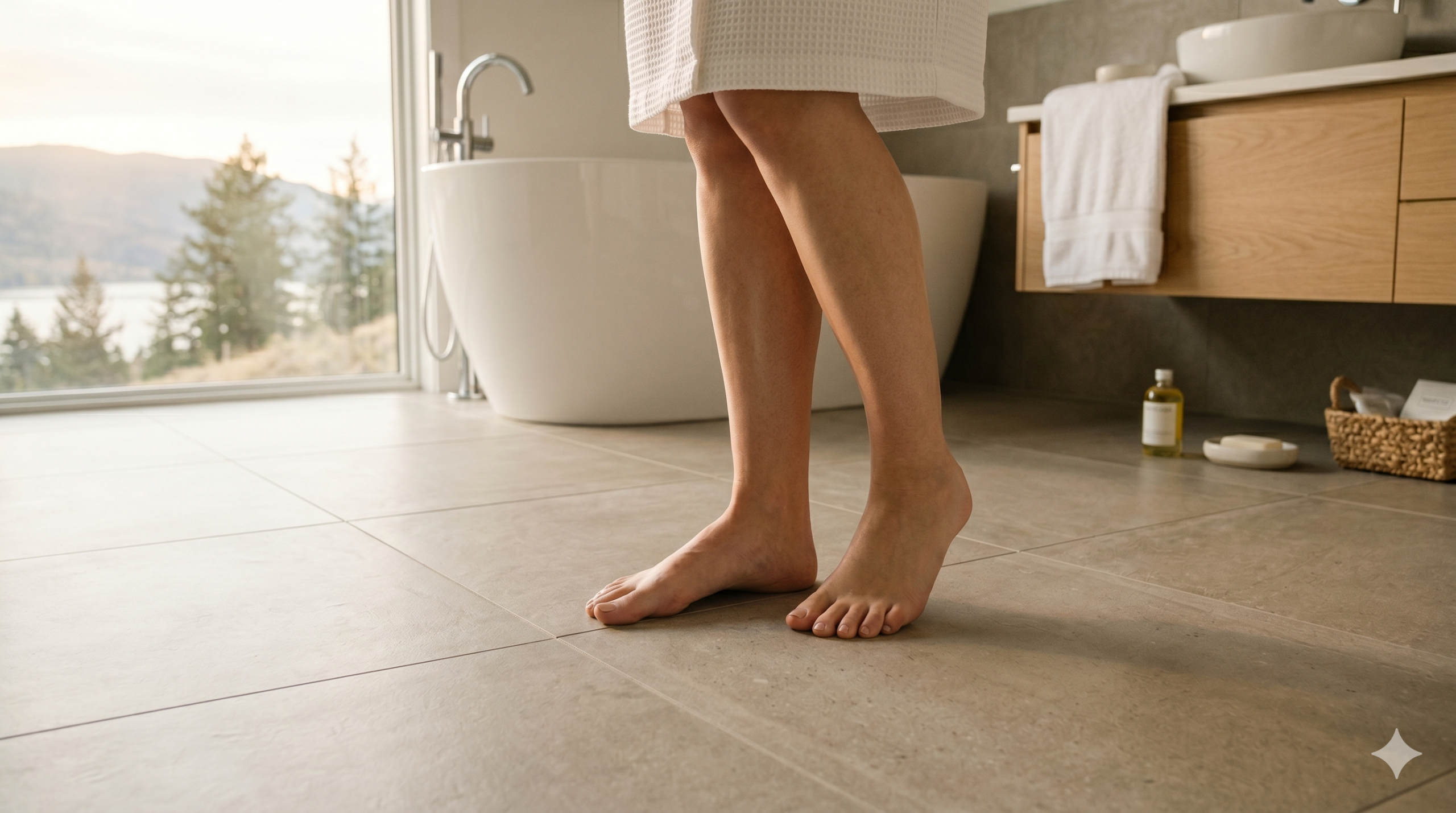
 h
hAre Heated Bathroom Floors Worth It in the Okanagan?
May 13, 2026Choosing bathroom flooring in the Okanagan is not just about finding something that looks good under showroom lights. Between cold tile on winter mornings, dry summer dust, renovation budgets, muddy pets, lake-house traffic, and the occasional “why is the bathroom always freezing?” complaint, the right floor needs to do more than look pretty.
That is why Heated Bathroom Floors have become such a popular upgrade for homeowners, renovators, and builders throughout Kelowna and the Okanagan. They are comfortable, practical, and when planned properly, they can add a polished, high-end feel to a bathroom without making the space feel overbuilt.
At Kelowna Floors, we see many homeowners comparing heated flooring options during bathroom renovations, new builds, ensuite upgrades, basement bathroom projects, and lake home improvements. The big question is simple: are they actually worth it
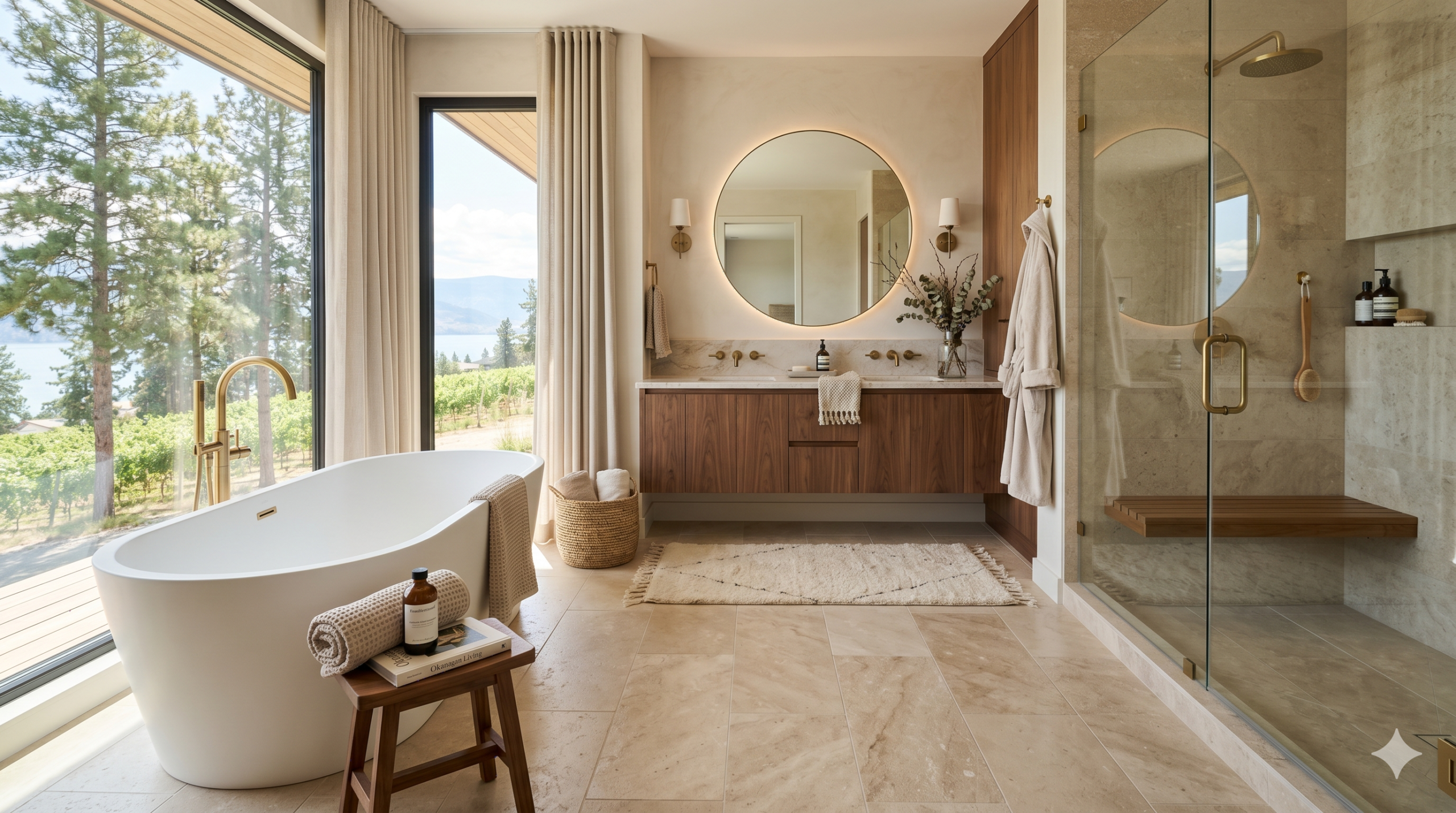
Quick Answer: Are Heated Bathroom Floors Worth It?
Quick answer: Heated bathroom floors are often worth it in Okanagan homes, especially in bathrooms with tile, ensuites, basement bathrooms, and renovation projects where the floor is already being replaced. They add daily comfort, support a more premium bathroom experience, and may help improve perceived resale appeal. The key is choosing the right flooring material, heating system, thermostat, and installation plan before the renovation starts.
They are not the right choice for every project, especially if the bathroom floor is not being replaced or if the budget is extremely tight. But when installed at the right stage, heated floors can be one of those upgrades you appreciate every single morning. Cold tile has a way of making people very honest.
What Are Heated Bathroom Floors?
Heated bathroom floors use radiant heat installed beneath the finished flooring surface. Instead of relying only on warm air blowing through a vent, the system warms the floor itself, creating a more even and comfortable feel underfoot.
There are two common types of radiant floor heating:
Electric Radiant Floor Heating
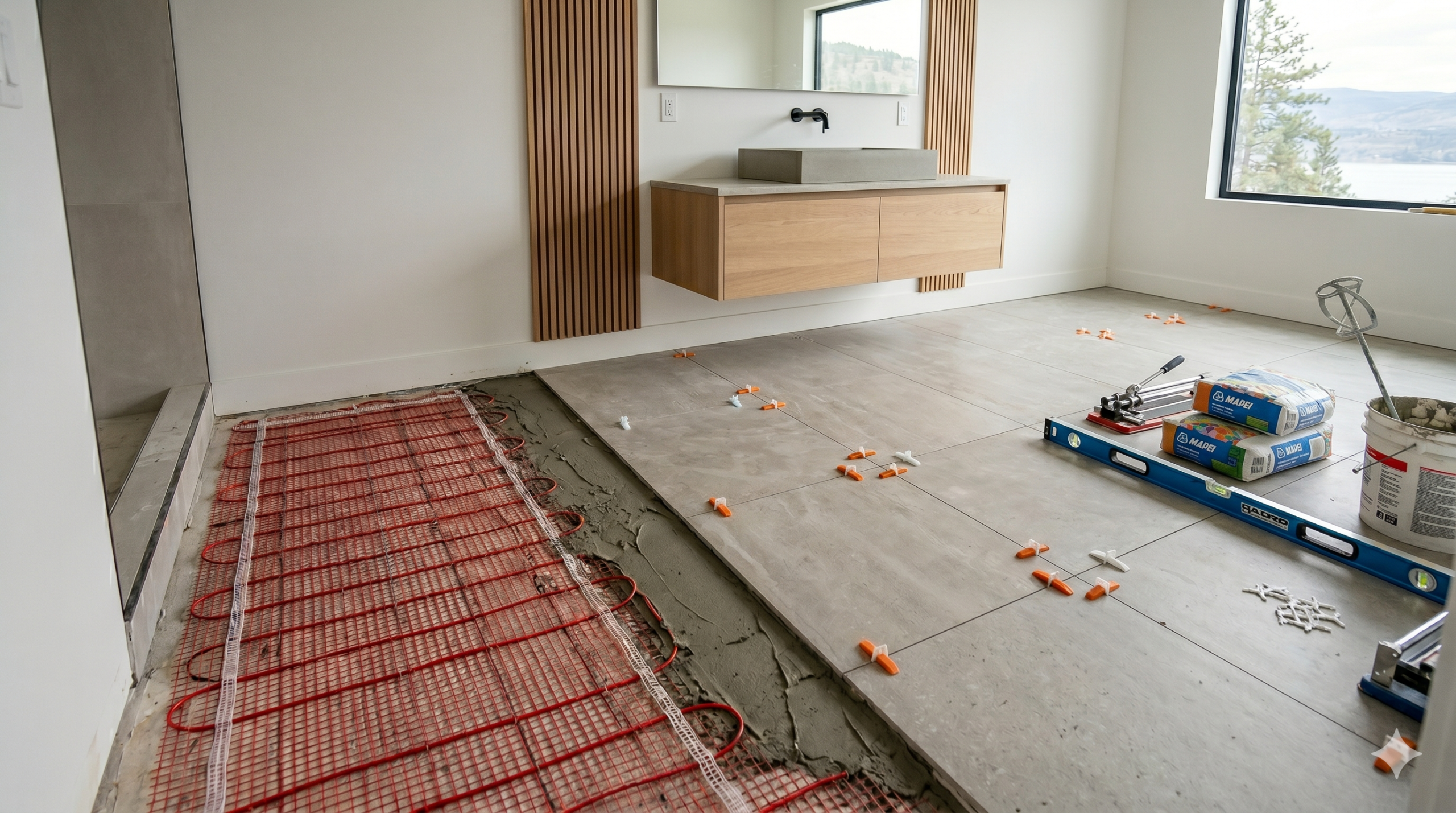
Electric heated floors use cables, mats, or heating elements installed beneath the flooring. This is a common option for bathroom renovations because it can often be added to smaller spaces without needing a full mechanical system.
Electric systems are especially popular for bathrooms, ensuites, powder rooms, and other targeted areas where comfort matters most.
Hydronic Radiant Floor Heating
Hydronic radiant heating uses warm water running through tubing beneath the floor. This system is more common in larger projects, whole-home heating plans, or new construction, where mechanical planning happens early.
Natural Resources Canada describes radiant floor systems as either electric systems, which use resistance wires to heat the flooring material, or hydronic systems, which use warm fluid to deliver heat through the floor assembly.
For most bathroom renovations in Kelowna, electric radiant heating is usually the more common conversation. For new builds or larger custom homes, hydronic may be worth discussing with the builder, mechanical contractor, and flooring team early in the planning stage.
Why Heated Bathroom Floors Make Sense in Okanagan Homes
Okanagan homes deal with a funny mix of conditions. We get dry summers, dusty seasons, winter slush, lake traffic, busy households, rental turnover, and homes that range from older renovations to high-end new builds.
Bathrooms are especially sensitive because they combine moisture, comfort expectations, and flooring materials that can feel cold underfoot. Tile is beautiful and durable, but nobody has ever stepped onto cold tile in January and thought, “Ah yes, luxury.”
Heated bathroom floors can make sense because they:
- Add comfort in colder months
- Work especially well under tile and stone
- Help create a more spa-like ensuite or bathroom experience
- Can be appealing in new builds, custom homes, and higher-end renovations
- May improve the perceived value of a bathroom upgrade
- Are easier to install when the flooring is already being replaced
The best flooring choice usually depends on how the space is used every day. A guest powder room, family bathroom, basement bathroom, and primary ensuite may all need slightly different products and budget decisions.
Are Heated Bathroom Floors Energy Efficient?
Heated bathroom floors can be efficient when used properly, especially in smaller spaces with programmable thermostats. They are designed to warm the floor surface directly, which can make the room feel more comfortable without relying entirely on forced air.
Radiant heating can be more efficient than traditional baseboard and forced-air systems because it delivers heat directly to the space and, in the case of forced-air systems, eliminates energy losses associated with ductwork. People with allergies may also prefer radiant systems because they do not distribute allergens the same way forced-air systems can.
That does not mean heated bathroom floors are “free heat” or automatically the cheapest way to warm a bathroom. Operating cost depends on the room size, insulation, thermostat settings, flooring material, how often the system runs, electricity rates, and the existing heating setup.
The practical takeaway is this: heated bathroom floors are usually best treated as a comfort upgrade, not as the sole heating plan for the entire home.
Best Flooring Materials for Heated Bathroom Floors
Not every floor covering is ideal for radiant heat. The flooring material needs to conduct heat well, handle bathroom moisture, and be approved by the manufacturer for use over radiant heating.
Tile
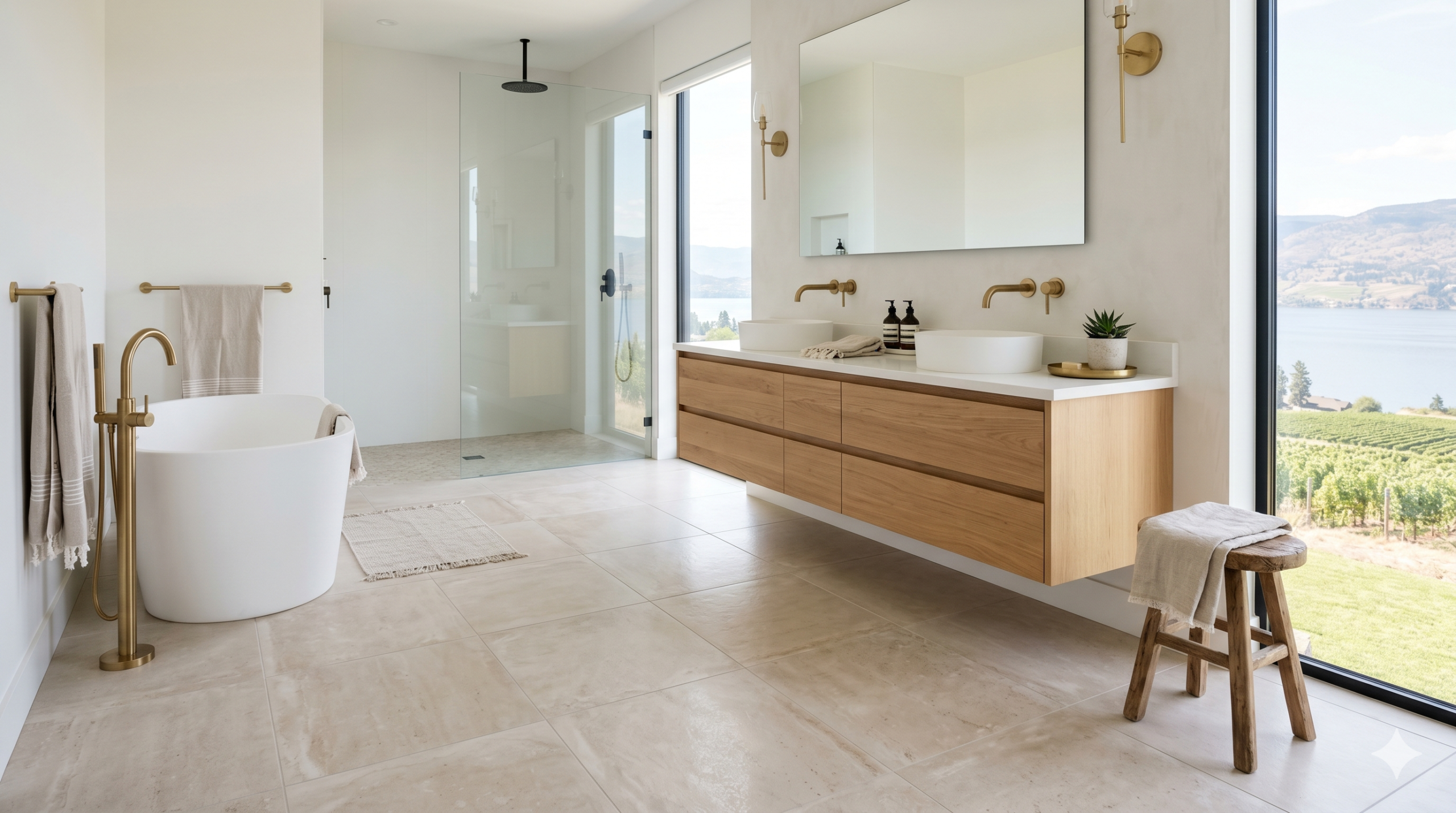
Tile is often the top choice for heated bathroom floors. It conducts heat well, handles moisture, and is already common in bathrooms, showers, and ensuite designs.
For homeowners, this is the classic pairing: heated floor system plus tile. It is practical, durable, and comfortable when installed correctly.
Natural Stone
Natural stone can also work well with radiant heat, but it requires careful product selection and installation. Stone can be beautiful, but it may need more maintenance than porcelain or ceramic tile.
For higher-end homes, lake properties, and custom builds, stone may be worth considering. For busy family bathrooms, porcelain tile can often deliver a similar premium look with easier maintenance.
Luxury Vinyl
Some luxury vinyl products may be compatible with radiant heat, but this depends on the specific manufacturer’s guidelines. This is where people can get into trouble by assuming every product works the same way.
Some luxury vinyl, laminate, and engineered flooring products may be compatible with radiant heat, but compatibility depends on the specific product, heating system, temperature limits, and manufacturer guidelines. Always confirm radiant heat approval before installation.
In plain English: do not guess. If you want heated floors under vinyl, confirm product compatibility before buying anything.
Laminate and Engineered Wood
Laminate and engineered wood may be compatible in some cases, but they require careful review. Bathrooms also bring moisture considerations, so these materials are not always the first choice for heated bathroom floors.
A floor that works beautifully in a quiet bedroom may not be the best choice for a busy bathroom with steam, spills, bath mats, kids, and the occasional towel that mysteriously never makes it to the hook.
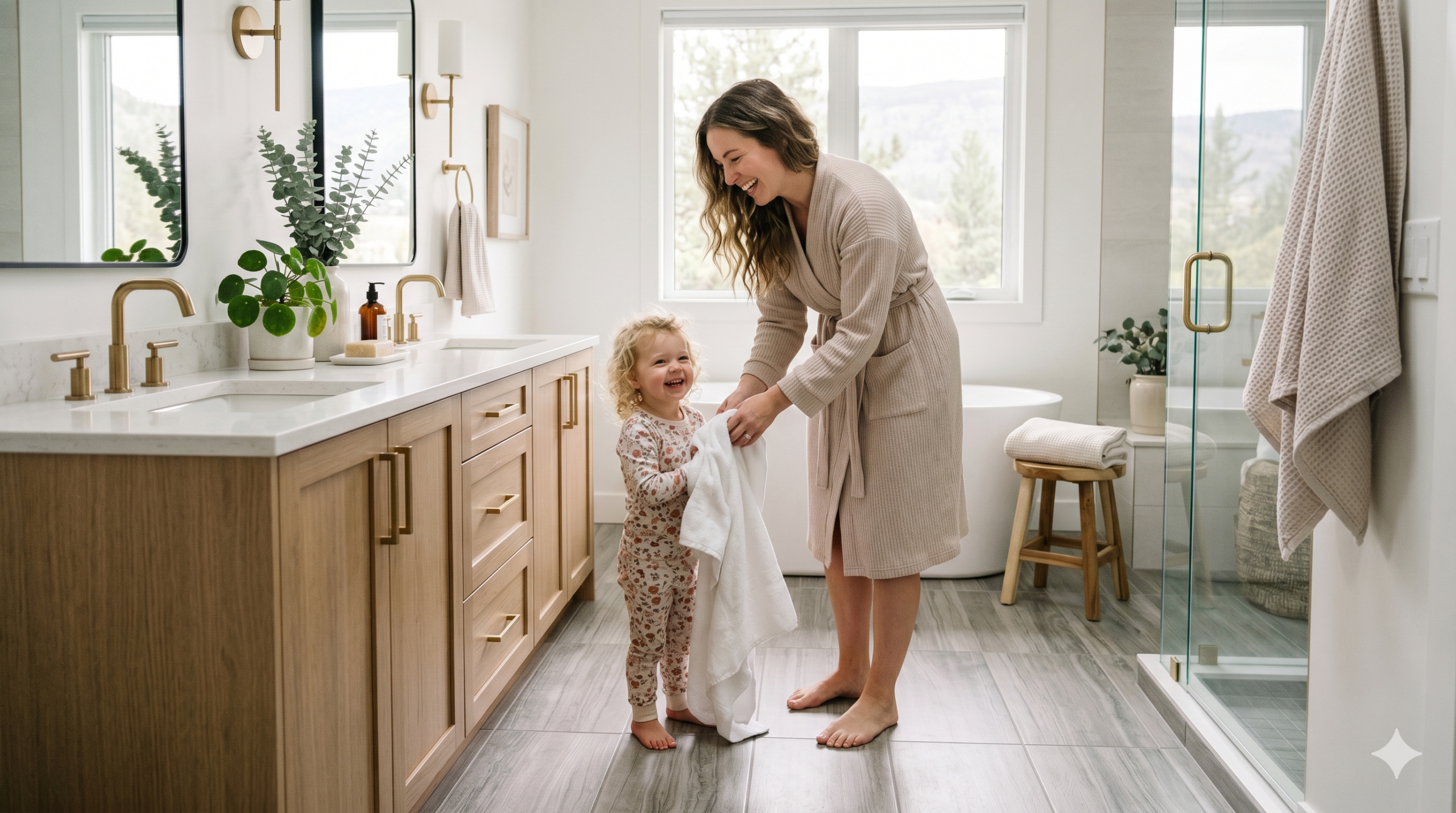
When Heated Bathroom Floors Are Worth It
Heated bathroom floors are most worth it when they are planned into a project early and installed in a space where comfort, resale appeal, and daily use matter.
They are a strong fit for:
Primary Ensuites
A heated floor can make a primary ensuite feel more comfortable and finished. If the bathroom is part of a larger renovation or new build, this is often one of the best places to include radiant heat.
Basement Bathrooms
Basement bathrooms can feel cooler than the rest of the home, especially in older Okanagan houses. Heated flooring can make the room feel more usable and less like the bathroom everyone avoids unless absolutely necessary.
Tile Bathroom Renovations
If the existing bathroom floor is already coming out, adding radiant heat becomes much more practical. The best time to plan heated floors is before tile is installed, not after the renovation dust has settled and someone says, “Should we have added heat?”
Custom Homes and New Builds
For builders, heated bathroom floors can be a smart feature in new homes, especially in ensuites, high-end bathrooms, and homes designed around comfort and long-term livability.
Lake Homes and Vacation Properties
In lake homes and vacation properties, comfort features can make a property feel more polished. Heated floors can also be appealing in homes used during shoulder seasons, when the mornings are cooler and bare feet are less forgiving.
When Heated Bathroom Floors May Not Be the Right Choice
Heated bathroom floors are great, but they are not magic. They may not be the best fit for every project.
They may not be ideal if:
- The existing floor is staying in place
- The renovation budget is already tight
- The bathroom is rarely used
- The flooring material is not compatible with radiant heat
- The subfloor needs more work than expected
- The project timeline does not allow for proper planning
- The homeowner expects the heated floor to replace the entire room’s heating system
The biggest mistake is choosing heated bathroom floors based on comfort alone without checking installation requirements, flooring compatibility, thermostat placement, and long-term use.
Cost and Value Considerations
The cost of heated bathroom floors depends on the size of the bathroom, the heating system, the flooring material, subfloor preparation, electrical needs, and installation complexity.
For a small powder room, the cost may be more manageable. For a large ensuite with custom tile, shower transitions, benches, niches, and premium finishes, the total project cost can climb quickly.
What affects cost?
- Bathroom size
- Electric vs hydronic system
- Subfloor condition
- Tile or flooring selection
- Thermostat type
- Electrical work
- Waterproofing and uncoupling membrane needs
- Labour and installation details
- Whether the renovation is already underway
For homeowners, the value is usually found in daily comfort and bathroom quality. For builders, the value may come from offering a feature that makes a home feel more considered and premium. For resale, heated bathroom floors may not guarantee a specific return, but they can contribute to a stronger overall impression, especially in a well-designed bathroom.
In most flooring projects, installation quality matters just as much as the product itself.
Builder and Renovation Planning Considerations
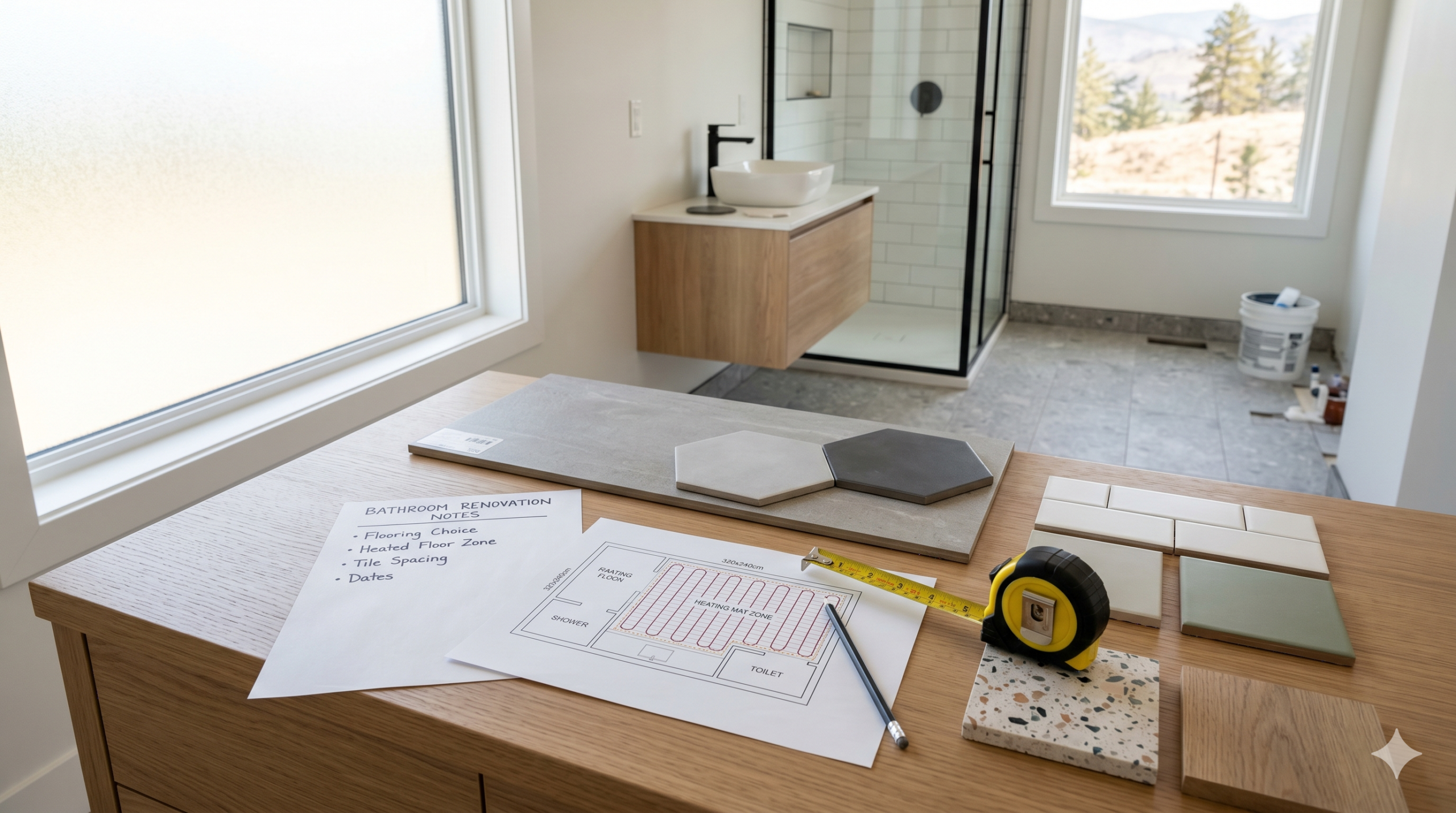
For builders and renovators in Kelowna and the Okanagan, heated bathroom floors should be discussed early. They affect product selection, installation sequence, electrical coordination, floor height, transition planning, and timeline.
Builders should consider:
- Whether the system is electric or hydronic
- Finished floor height and transitions
- Compatibility with the selected tile or flooring
- Thermostat placement
- Electrical load and wiring needs
- Waterproofing requirements
- Installation sequencing
- Product availability
- Warranty requirements
This is especially important in custom homes, multifamily projects, and renovations where design details and construction schedules are tightly connected.
Kelowna Floors can help builders, homeowners, and designers narrow flooring options based on the actual project, not just what looks good on a sample board.
Do Heated Bathroom Floors Help Resale Value?
Heated bathroom floors can help improve the perceived quality of a renovation, especially in primary ensuites and higher-end bathrooms. Buyers may not choose a home based only on heated floors, but they often notice comfort-focused details when comparing similar properties.
Bathroom trends continue to lean toward comfort, wellness, and spa-inspired design. Better Homes & Gardens, referencing NKBA bath trend insights, describes heated flooring and towel warmers as accessible comfort upgrades that support a more wellness-focused bathroom experience.
That said, resale value depends on the whole bathroom. Heated floors will not rescue poor tile selection, bad layout, weak lighting, or sloppy installation. They work best as part of a complete, thoughtful bathroom upgrade.
Common Mistakes to Avoid
Heated bathroom floors are worth planning properly. Cutting corners usually shows up later, often after the tile is already down and everyone is suddenly very quiet.
Avoid these mistakes:
- Choosing flooring before confirming radiant heat compatibility
- Forgetting about the finished floor height
- Treating heated floors as a last-minute add-on
- Choosing the cheapest thermostat without considering daily use
- Installing heat in areas where it will not be useful
- Forgetting that vanities, tubs, and fixed cabinets affect the heat layout
- Assuming all luxury vinyl, laminate, or tile products behave the same way
For homeowners, the safest approach is to choose the flooring, heating system, and installation plan together.
Questions to Ask Before Choosing Heated Bathroom Floors
Before moving ahead, ask:
- Is the bathroom floor already being replaced?
- What flooring material do I want?
- Is that material approved for radiant heat?
- Is electric or hydronic heating the better option for this project?
- Will the system be used daily or occasionally?
- Does the bathroom need supplemental heat?
- What does the subfloor look like?
- Will this affect flooring transitions into nearby rooms?
- Who is coordinating the electrical and flooring installation?
- What warranty requirements apply?
A good flooring decision is not just about the product. It is about how the product, installation, room use, budget, and long-term expectations fit together.
How Kelowna Floors Can Help
Kelowna Floors helps homeowners, businesses, builders, renovators, and designers choose flooring that fits the space, not just the showroom sample.
For heated bathroom floors, that means helping you compare practical flooring options, understand product compatibility, think through design goals, and plan for long-term performance. Whether you are updating a small bathroom, renovating a primary ensuite, finishing a basement bathroom, or planning a new build, the right advice early in the process can save time, cost, and a few cold-footed regrets.
FAQ: Heated Bathroom Floors
Are heated bathroom floors worth it in Kelowna homes?
Yes, heated bathroom floors are often worth it in Kelowna homes, especially in bathrooms with tile, basement bathrooms, and primary ensuites. They add comfort during colder months and can make a renovation feel more complete. They are most practical when installed during a planned flooring replacement or bathroom renovation.
What flooring works best with heated bathroom floors?
Tile is usually the best flooring choice for heated bathroom floors because it conducts heat well and handles bathroom moisture. Natural stone can also work well, but may require more maintenance. Some luxury vinyl, laminate, or engineered products may be compatible, but you should always confirm manufacturer approval first.
Can heated floors be installed under vinyl?
Some luxury vinyl products can be installed over radiant heat, but not all of them. Compatibility depends on the specific flooring product, heating system, temperature limits, and installation method. Always check the manufacturer’s guidelines before choosing vinyl for a heated bathroom floor.
Are heated bathroom floors expensive to run?
Operating cost depends on the size of the bathroom, thermostat settings, insulation, flooring material, electricity rates, and how often the system is used. In smaller bathrooms, heated floors are often used as a comfort feature rather than a full-room heating replacement. A programmable thermostat can help manage energy use.
Are heated bathroom floors good for resale value?
Heated bathroom floors may improve the perceived value and comfort of a bathroom, especially in primary ensuites and higher-end renovations. They do not guarantee a specific resale return, but they can help a bathroom feel more premium and thoughtfully designed. They work best when paired with strong flooring, lighting, layout, and installation choices.
When should heated floors be added during a renovation?
Heated floors should be planned before the new flooring is installed. The best time to add them is when the existing floor is already being removed, especially during a tile bathroom renovation. Planning early helps avoid issues with floor height, wiring, waterproofing, layout, and product compatibility.
Are heated bathroom floors better for new builds or renovations?
They can work well in both. In renovations, they are easiest to add when the bathroom floor is already being replaced. In new builds, builders can plan heated floors earlier, which makes it easier to coordinate electrical, flooring, transitions, and design details.
Where can I compare heated bathroom flooring options in Kelowna?
You can visit the Kelowna Floors showroom to compare flooring materials, styles, and product options in person. Seeing samples up close helps homeowners, builders, and renovators choose flooring that fits the space, budget, and long-term use.
Work With Kelowna Floors for Commercial Flooring Installation in Kelowna
Planning a bathroom renovation, new build, or ensuite upgrade? Visit the Kelowna Floors showroom or book your complimentary measure and estimate. The Kelowna Floors team can help you compare flooring options, understand what works with heated bathroom floors, and choose a solution that fits your home, budget, and long-term needs.
* Images are AI-generated or sourced from stock to visually explore the concepts and creative possibilities discussed in this article.


