
 h
hBest Flooring for High Traffic Areas: The Okanagan Stress Test
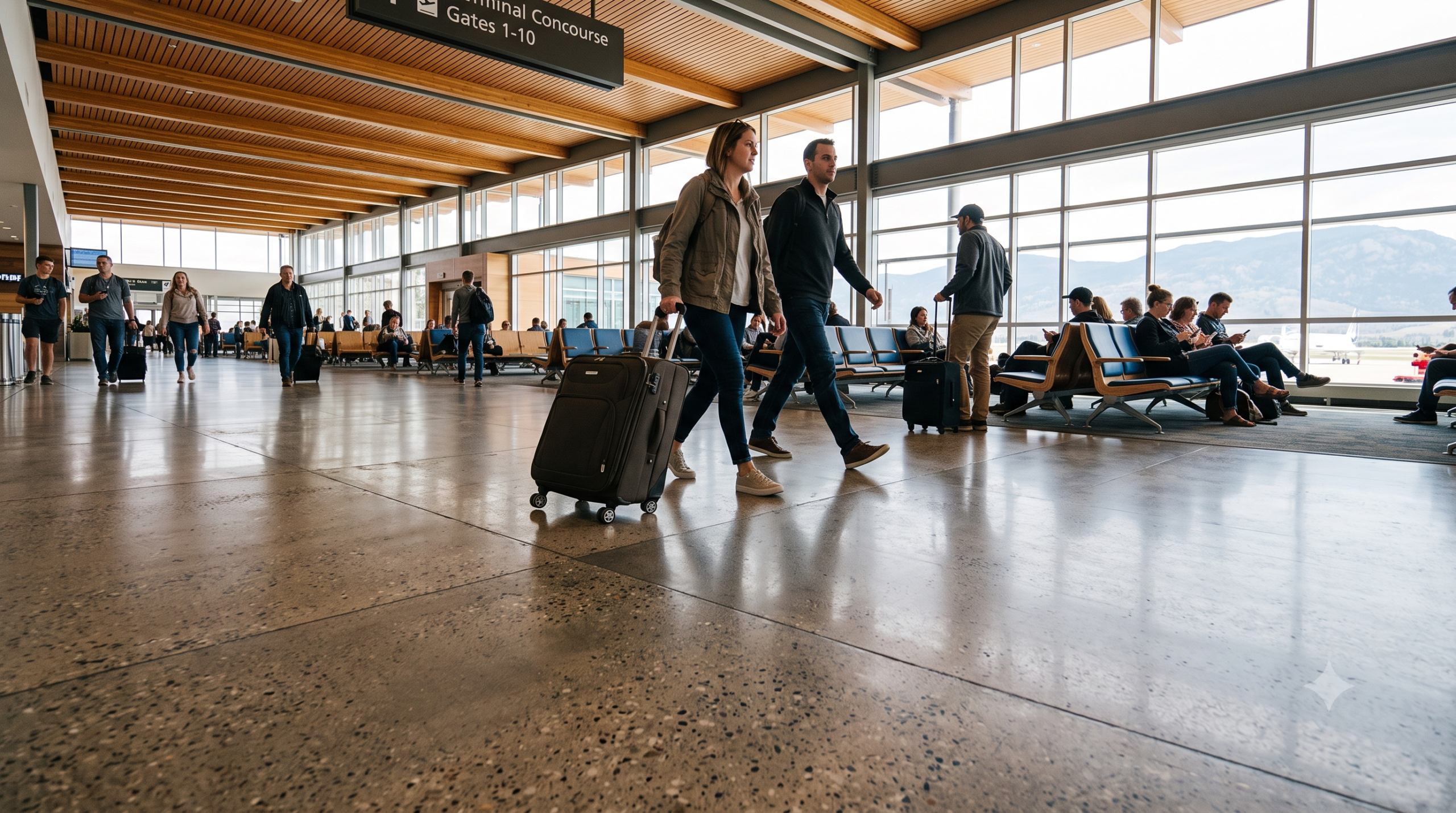
July 16, 2026Choosing the best flooring for high-traffic areas is not just about picking the toughest-looking product in the showroom. In the Okanagan, your floors may need to handle sandy shoes after a beach day, muddy paws after a trail walk, wet boots in winter, kids running through the kitchen, rolling office chairs, tenant turnover, or customers walking in and out all day.
That is a lot to ask from one surface.
The good news? There are excellent flooring options for busy homes, commercial spaces, rental properties, and new builds. The trick is knowing what kind of traffic your floor is really up against.
What is the best flooring for high-traffic areas?
The best flooring for high-traffic areas is usually luxury vinyl plank, porcelain tile, water-protected laminate, commercial vinyl, or carpet tile, depending on the space. For busy family homes, water-protected laminate is often the most practical all-around choice because it is durable, water-resistant, comfortable underfoot, and easy to maintain. For entryways, bathrooms, commercial spaces, and areas exposed to heavy moisture, porcelain tile or commercial-grade vinyl may be a better fit.
There is no single “best” floor for every high-traffic space. A lake house entryway, a downtown Kelowna retail shop, a townhouse development, and a family kitchen all need slightly different things.
That is where the Okanagan stress test comes in.
The Okanagan high-traffic flooring test
Before comparing products, it helps to define what “high traffic” actually means. For some homes, it means two adults, three kids, a dog, and a kitchen that never gets a break. For a business, it may mean hundreds of customers walking across the same path every week. For a property manager, it could mean move-ins, move-outs, furniture drag, spills, pets, and tenants who may not treat the floor quite as gently as the owner would.
When Kelowna Floors helps clients choose flooring, the right question is not only “What looks good?” It is “What will still look good after real life gets involved?”
A good high-traffic floor should pass these tests:
- Scratch resistance: Can it handle pets, chairs, grit, shoes, and daily movement?
- Water resistance: Can it deal with wet boots, spills, bathrooms, kitchens, and mudrooms?
- Cleanability: Can it be cleaned without special products or constant maintenance?
- Comfort: Does it feel good underfoot in spaces where people stand or walk often?
- Repairability: If one area gets damaged, can it be fixed without replacing the whole floor?
- Design longevity: Will it still look current in five to ten years?
- Project fit: Does it suit the budget, timeline, subfloor, and intended use?
That last one matters. A technically durable floor can still be the wrong floor if it does not fit the space.
Luxury vinyl plank:
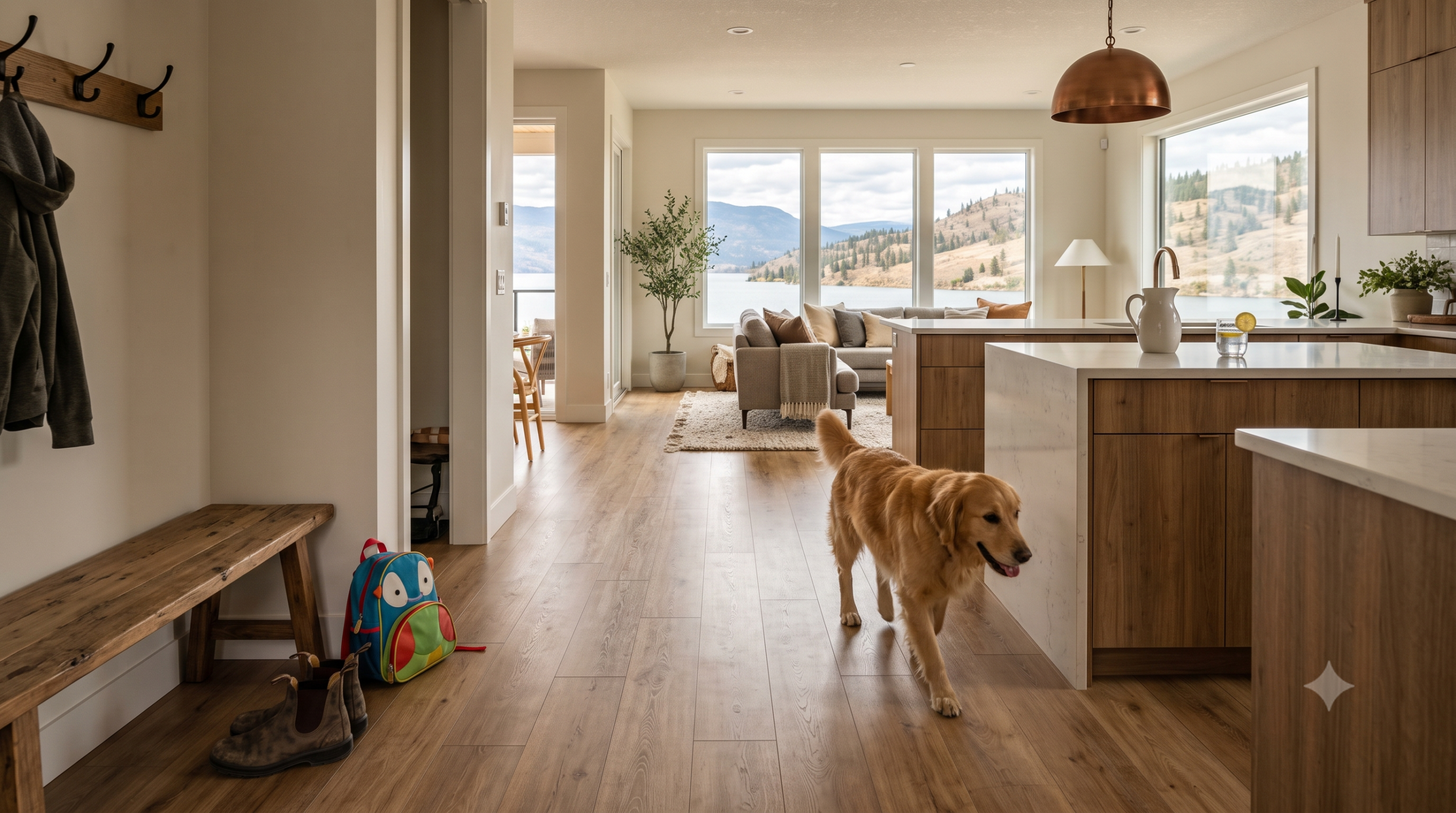
For many Okanagan homes, luxury vinyl plank is one of the strongest contenders for high-traffic areas. It is especially popular in kitchens, hallways, mudrooms, basements, rental suites, family rooms, and open-concept living spaces.
The biggest advantage is balance. Quality vinyl plank offers strong day-to-day durability, good water resistance, and a wide range of wood-look styles without the maintenance concerns of real hardwood. It is also more forgiving underfoot than tile, which can be helpful in homes where people are standing, cooking, cleaning, and walking all day.
For homeowners, vinyl plank is a smart option when the flooring needs to handle kids, pets, spills, and everyday life without becoming precious. For property managers, it can also make sense because certain installation systems allow damaged sections to be replaced more easily than many traditional flooring types.
Where it works best:
Kitchens, entryways, hallways, basement suites, family rooms, rental properties, offices, and light commercial spaces.
Where to be careful:
Not all vinyl is the same. Wear layer, core construction, installation method, and product quality matter. A bargain plank may look similar on a sample board, but it may not perform the same once it is installed across a busy home or business.
Porcelain tile: The heavy-duty performer
If your main concern is toughness, water resistance, and long-term performance, porcelain tile deserves serious consideration. It is one of the best flooring options for high-traffic areas that also deal with moisture.
In the Okanagan, porcelain tile makes a lot of sense in entryways, bathrooms, laundry rooms, mudrooms, commercial washrooms, and high-use kitchens. It can handle wet shoes, tracked-in grit, spills, and frequent cleaning. Tile is also available in designs that mimic stone, concrete, and wood, so it does not have to feel cold or overly traditional.
The trade-off is comfort and installation cost. Tile is harder underfoot than vinyl, laminate, carpet, or wood. It also requires proper prep, setting materials, grout, layout planning, and skilled installation. A great tile floor can last a long time, but it needs to be done right from the start.
Where it works best:
Entryways, mudrooms, bathrooms, laundry rooms, commercial spaces, restaurants, salons, and wet areas.
Where to be careful:
Tile can feel hard and cool underfoot. In large living areas, some homeowners prefer a warmer flooring material unless they are also considering area rugs or in-floor heating.
Water-protected laminate: The realistic wood-look contender
Laminate has come a long way. Older laminate developed a reputation for struggling with moisture, but many newer water-protected laminate products are much more practical for busy households.
Laminate can also be a strong value choice for high-traffic areas. In many projects, quality laminate can outperform vinyl on overall durability and price, especially when the space is not heavily moisture-prone. It can also require less subfloor preparation than some vinyl products, which may help reduce the overall installation cost.
For homeowners who love the look of wood but want better scratch resistance than many hardwood options, laminate can be a strong fit. It often performs well in living rooms, bedrooms, hallways, and open-concept spaces where the main concern is foot traffic, pets, and everyday surface wear.
The key is choosing the right laminate for the right area. Water-protected does not mean indestructible. It still needs sensible cleaning habits, quick spill cleanup, and proper installation.
Where it works best:
Living rooms, bedrooms, hallways, offices, family rooms, and some kitchens or entryways, depending on the product.
Where to be careful:
Avoid assuming every laminate is suitable for every busy or moisture-prone area. Product specifications matter, especially if the space sees wet boots, pet bowls, or frequent spills.
Engineered hardwood: Beautiful, but choose placement carefully
Engineered hardwood brings warmth, character, and natural beauty into a home. For many Okanagan homeowners and builders, it is still a favourite in main living areas, custom homes, and renovations where design value matters.
But when it comes to the best flooring for high-traffic areas, hardwood needs a more thoughtful conversation. It can absolutely work in busy homes, especially when the product has a quality finish and the household is prepared to maintain it. Some engineered hardwood products are built with more advanced core construction and improved moisture resistance, making them more practical than traditional hardwood in certain busy spaces.
That said, engineered hardwood is still not usually the most carefree choice for wet entryways, commercial traffic, or areas with heavy grit and moisture. Think of it as the “worth it, but choose the right product and placement” option.
Where it works best:
Living rooms, dining rooms, bedrooms, offices, custom homes, and feature spaces where warmth and natural materials matter.
Where to be careful:
Mudrooms, wet entryways, bathrooms, high-turnover rentals, and commercial areas with heavy foot traffic may be better served by vinyl, tile, laminate, or commercial flooring.
Carpet tile: The underrated commercial and rental solution
Carpet tile does not always get the spotlight, but it can be very useful in commercial spaces, offices, multi-family buildings, and certain rental applications.
The big advantage is replaceability. If one tile gets stained or damaged, you may be able to replace that section instead of redoing the whole room. Carpet tile also helps with sound absorption, which can matter in offices, hallways, multi-unit properties, and spaces where comfort underfoot is important.
Where it works best:
Offices, reception areas, commercial corridors, bedrooms in rental units, playrooms, and multi-family spaces.
Where to be careful:
It is not ideal for wet zones, mudrooms, or areas where spills and moisture are constant.
Porcelain tile: The heavy-duty performer
If your main concern is toughness, water resistance, and long-term performance, porcelain tile deserves serious consideration. It is one of the best flooring options for high-traffic areas that also deal with moisture.
In the Okanagan, porcelain tile makes a lot of sense in entryways, bathrooms, laundry rooms, mudrooms, commercial washrooms, and high-use kitchens. It can handle wet shoes, tracked-in grit, spills, and frequent cleaning. Tile is also available in designs that mimic stone, concrete, and wood, so it does not have to feel cold or overly traditional.
The trade-off is comfort and installation cost. Tile is harder underfoot than vinyl, laminate, carpet, or wood. It also requires proper prep, setting materials, grout, layout planning, and skilled installation. A great tile floor can last a long time, but it needs to be done right from the start.
Where it works best:
Entryways, mudrooms, bathrooms, laundry rooms, commercial spaces, restaurants, salons, and wet areas.
Where to be careful:
Tile can feel hard and cool underfoot. In large living areas, some homeowners prefer a warmer flooring material unless they are also considering area rugs or in-floor heating.
Water-protected laminate: The realistic wood-look contender
Laminate has come a long way. Older laminate developed a reputation for struggling with moisture, but many newer water-protected laminate products are much more practical for busy households.
Laminate can also be a strong value choice for high-traffic areas. In many projects, quality laminate can outperform vinyl on overall durability and price, especially when the space is not heavily moisture-prone. It can also require less subfloor preparation than some vinyl products, which may help reduce the overall installation cost.
For homeowners who love the look of wood but want better scratch resistance than many hardwood options, laminate can be a strong fit. It often performs well in living rooms, bedrooms, hallways, and open-concept spaces where the main concern is foot traffic, pets, and everyday surface wear.
The key is choosing the right laminate for the right area. Water-protected does not mean indestructible. It still needs sensible cleaning habits, quick spill cleanup, and proper installation.
Where it works best:
Living rooms, bedrooms, hallways, offices, family rooms, and some kitchens or entryways, depending on the product.
Where to be careful:
Avoid assuming every laminate is suitable for every busy or moisture-prone area. Product specifications matter, especially if the space sees wet boots, pet bowls, or frequent spills.
Engineered hardwood: Beautiful, but choose placement carefully
Engineered hardwood brings warmth, character, and natural beauty into a home. For many Okanagan homeowners and builders, it is still a favourite in main living areas, custom homes, and renovations where design value matters.
But when it comes to the best flooring for high-traffic areas, hardwood needs a more thoughtful conversation. It can absolutely work in busy homes, especially when the product has a quality finish and the household is prepared to maintain it. Some engineered hardwood products are built with more advanced core construction and improved moisture resistance, making them more practical than traditional hardwood in certain busy spaces.
That said, engineered hardwood is still not usually the most carefree choice for wet entryways, commercial traffic, or areas with heavy grit and moisture. Think of it as the “worth it, but choose the right product and placement” option.
Where it works best:
Living rooms, dining rooms, bedrooms, offices, custom homes, and feature spaces where warmth and natural materials matter.
Where to be careful:
Mudrooms, wet entryways, bathrooms, high-turnover rentals, and commercial areas with heavy foot traffic may be better served by vinyl, tile, laminate, or commercial flooring.
Carpet tile: The underrated commercial and rental solution
Carpet tile does not always get the spotlight, but it can be very useful in commercial spaces, offices, multi-family buildings, and certain rental applications.
The big advantage is replaceability. If one tile gets stained or damaged, you may be able to replace that section instead of redoing the whole room. Carpet tile also helps with sound absorption, which can matter in offices, hallways, multi-unit properties, and spaces where comfort underfoot is important.
Where it works best:
Offices, reception areas, commercial corridors, bedrooms in rental units, playrooms, and multi-family spaces.
Where to be careful:
It is not ideal for wet zones, mudrooms, or areas where spills and moisture are constant.
Commercial vinyl and rubber: Built for business traffic
For business owners, the flooring conversation often shifts from “What will look nice?” to “What will perform, clean easily, meet safety needs, and reduce downtime?”
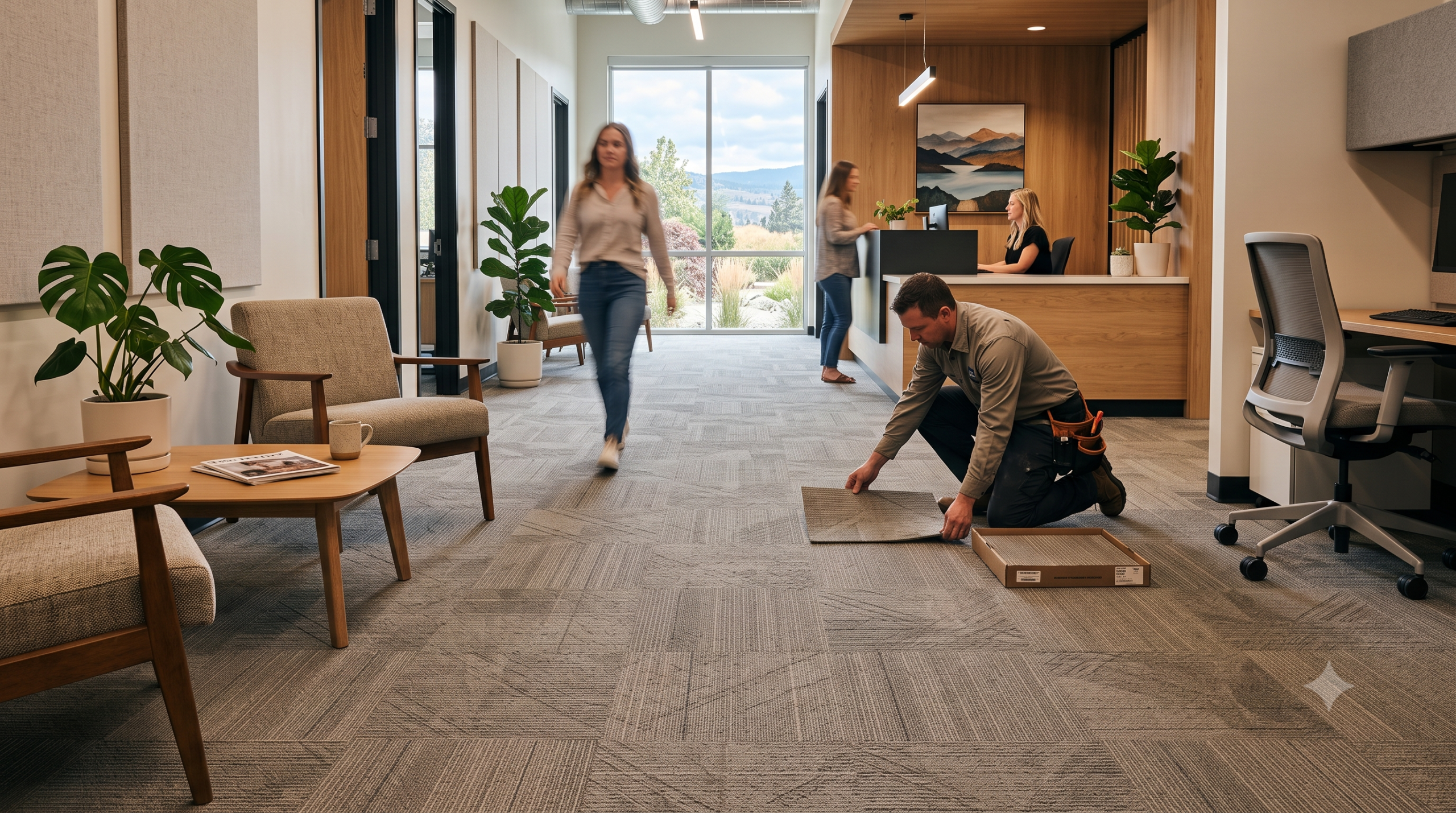
Commercial vinyl, rubber flooring, and carpet tile are common options because they are designed for heavier use. A retail shop, clinic, gym, office, studio, or hospitality space needs flooring that supports the customer experience while standing up to repeated traffic.
Commercial flooring also needs to consider slip resistance, maintenance routines, transitions, accessibility, and how the space will be used day to day. A beautiful floor that is hard to clean or constantly marked by traffic will become frustrating quickly.
Where it works best:
Retail spaces, offices, clinics, gyms, studios, service businesses, and commercial corridors.
Where to be careful:
Commercial spaces should not choose based on looks alone. Traffic level, cleaning process, safety, and installation schedule all matter.
The best flooring by situation
Best for busy family homes
Water-protected laminate is often the most practical choice for kitchens, hallways, family rooms, and entryways. Water-protected laminate is also a strong option when homeowners want a realistic wood look with good scratch resistance.
Best for pets
Vinyl plank, tile, and quality laminate are usually the top contenders. Look for scratch resistance, water resistance, and easy cleaning. Also, think about traction. Some very smooth floors can be slippery for pets.
Best for rental suites
Luxury vinyl plank, glue-down vinyl, and carpet tile can all make sense depending on the room. Property managers should prioritize durability, repairability, and fast turnover.
Best for builders
Builders often need flooring that looks great, installs efficiently, and minimizes future concerns. Vinyl plank, water-protected laminate, engineered hardwood, and tile all have a role depending on the price point and target buyer.
Best for commercial spaces
Commercial vinyl, carpet tile, rubber flooring, and porcelain tile are all strong options depending on the type of business. The right answer depends on traffic volume, cleaning requirements, comfort, acoustics, and design goals.
How to choose the right high-traffic flooring
Here is the simple decision path:
First, identify the worst thing the floor will face. Is it water, scratches, dirt, rolling chairs, pets, tenants, kids, or constant customers?
Second, decide how much maintenance you are willing to do. Some floors look amazing but need more care. Others are more forgiving.
Third, think about repair. In high-traffic spaces, damage is not always a question of “if.” Sometimes it is “when.” Choosing a floor that can be repaired in sections can save money later.
Fourth, match the flooring to the whole project. A family renovation, boutique retail space, townhouse build, and rental suite should not all get the same flooring by default.
That is where local advice helps. Kelowna Floors works with homeowners, builders, renovators, designers, business owners, and property managers across Kelowna and the Okanagan, helping match flooring products to how each space is actually used
FAQs about the best flooring for high-traffic areas
What flooring lasts the longest in high-traffic areas?
Porcelain tile is one of the longest-lasting options when properly installed. Luxury vinyl plank and commercial vinyl are also strong choices for busy spaces because they offer durability, water resistance, and easier maintenance.
Is vinyl or laminate better for high-traffic areas?
For most high-traffic residential spaces, quality laminate is often the better choice for value and durability. It usually offers strong scratch resistance, holds up well to daily wear, and may require less subfloor preparation than some vinyl products, which can help reduce the overall installation cost.
Vinyl still has its place, especially in areas where water resistance is the main priority. Glue-down vinyl can also be a smart choice for rentals, commercial spaces, or properties where individual board replacement may be needed more often.
What is the best flooring for high-traffic areas with pets?
Luxury vinyl plank, porcelain tile, and quality laminate are often good choices for homes with pets. Look for scratch resistance, water resistance, and a surface that is easy to clean.
What flooring is best for commercial high-traffic areas?
Commercial vinyl, carpet tile, rubber flooring, and porcelain tile are common options for high-traffic commercial spaces. The right choice depends on the business type, cleaning needs, safety requirements, and design goals.
Should every room use the same flooring?
Not always. Consistent flooring can make a space feel larger, especially in open-concept homes, but wet areas, stairs, bedrooms, and commercial zones may need different materials. The best flooring plan balances flow, function, and long-term performance.
Ready to put your floor through the real-life test?
The best floor is not just the one that looks good on day one. It is the one that still makes sense after muddy boots, lake sand, pets, kids, customers, tenants, furniture, cleaning, and everyday life have all had their turn.
Visit the Kelowna Floors showroom to compare durable flooring options in person, or book a complimentary measure and estimate to get practical recommendations for your home, business, rental property, or build.
* Images are AI-generated or sourced from stock to visually explore the concepts and creative possibilities discussed in this article.


