
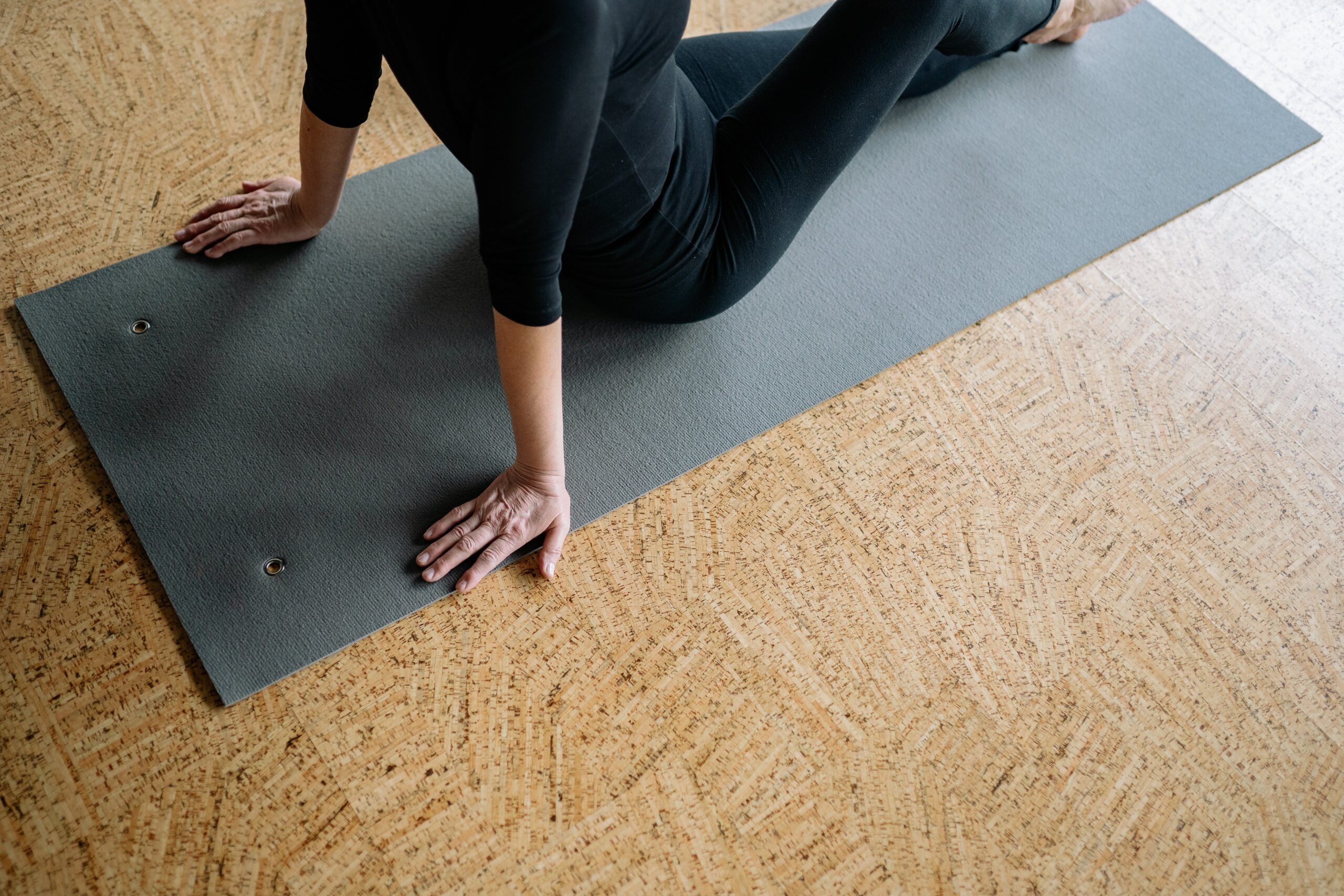
 h
hCork Flooring in the Okanagan: A Warmer, Quieter Option for Modern Homes and Workspaces
June 2, 2026Some flooring choices get all the attention. Vinyl plank is everywhere. Tile owns the bathroom conversation. Hardwood still gets the classic “dream home” treatment. Cork flooring, meanwhile, tends to sit quietly in the background, even though it solves some very real flooring problems.
In the Okanagan, flooring has to deal with dry summers, winter slush, dust, pets, busy households, rental wear, home offices, lake homes, and commercial spaces that need to look good without becoming a maintenance headache.
Cork flooring is not the right answer for every room. No flooring product is, despite what the internet may suggest after one confident scroll. But for homeowners, builders, renovators, and business owners looking for a floor that feels warmer, quieter, softer, and more environmentally thoughtful, cork is worth a serious look.
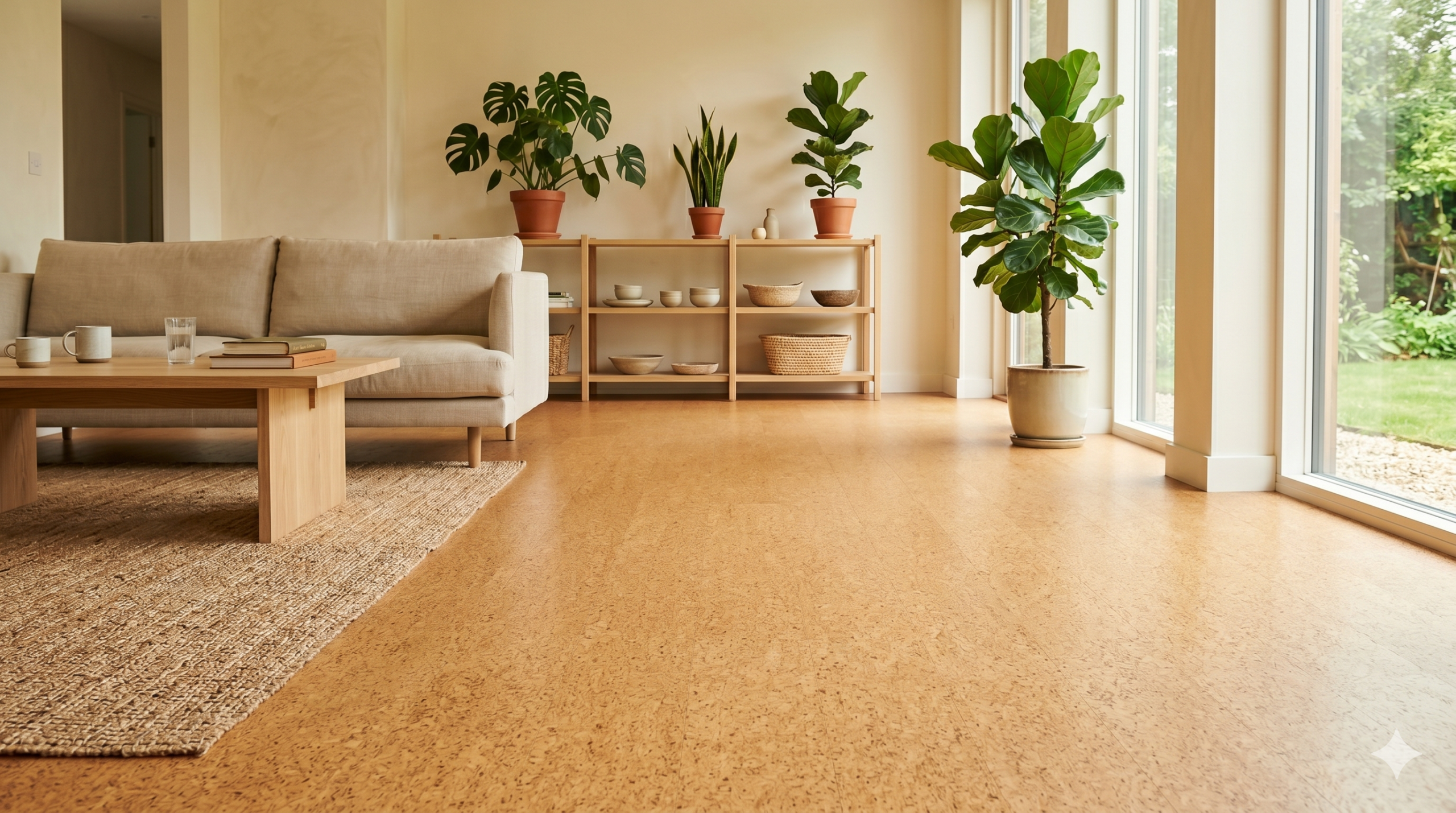
Is Cork Flooring Worth Considering?
Quick answer: Cork flooring is worth considering for dry residential and light commercial spaces where comfort, warmth, sound control, and sustainability matter. It works especially well in bedrooms, home offices, family rooms, studios, boutique offices, and wellness-style spaces. It is less ideal for wet rooms, heavy commercial traffic, or spaces with constant moisture, intense direct sunlight, or heavy wear from pets and furniture.
The best flooring choice depends on how the space is used every day. Cork is not a universal solution, but in the right room, it can be a smart and surprisingly practical one.
Why Cork Flooring Feels Different
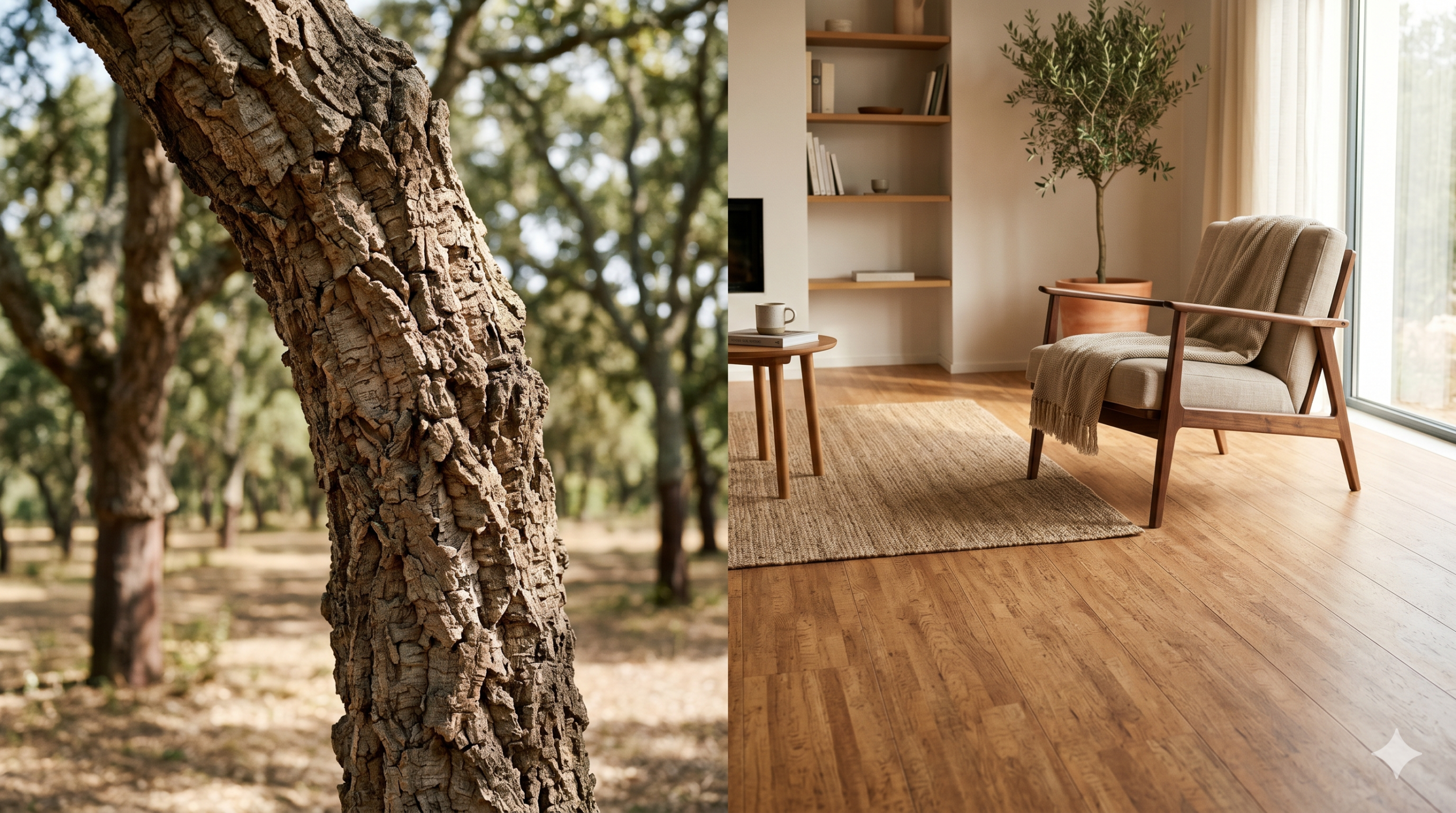
Cork flooring is made from the bark of the cork oak tree. The bark can be harvested without cutting down the tree, and it naturally grows back over time. That renewable harvesting process is one of the reasons cork has a stronger sustainability story than many people realize.
But the bigger reason people like cork is simple: it feels different.
Cork has a naturally resilient structure, which gives it a softer, slightly cushioned feel underfoot. The Resilient Floor Covering Institute describes cork flooring as warm and soft underfoot, with natural insulating qualities that help muffle sound.
That combination makes cork stand out from flooring that is durable but loud, beautiful but cold, or practical but not exactly comfortable.
In real-life terms, cork flooring can make a room feel:
- Warmer underfoot
- Quieter
- Softer to stand on
- More natural
- Less echoey
- More comfortable for everyday use
That matters in spaces where people work, relax, stand for long periods, or walk around barefoot before coffee has done its job.
The Sustainability Advantage of Cork Flooring
One of cork’s biggest strengths is its environmental value.
Cork comes from the bark of cork oak trees, not the whole tree. The Rainforest Alliance notes that cork oak forests support biodiversity, help reduce erosion, increase rainfall absorption, and store carbon. It also notes that harvested cork oak trees can store more carbon because the tree uses additional carbon as it regenerates its bark.
That does not mean every cork flooring product is automatically the most sustainable choice. Manufacturing, adhesives, finishes, transportation, product lifespan, and installation quality still matter. A floor that has to be replaced too soon is not exactly an environmental victory.
But compared with many fully synthetic flooring options, cork has a meaningful renewable-material advantage. For Okanagan homeowners, builders, and business owners who want a floor that balances comfort, design, and environmental responsibility, cork deserves a place on the shortlist.
Indoor air quality is also worth asking about. FloorScore is a certification program for low VOC emissions from hard surface flooring materials, adhesives, and underlayments, and it can support green building programs such as LEED, WELL, BREEAM, CHPS, and Green Globes.
For anyone comparing eco-friendly flooring options in Kelowna, the smart move is to ask about:
- Product construction
- Finish and adhesive type
- VOC certifications
- Maintenance requirements
- Expected lifespan
- Whether the product fits the actual room
Sustainability matters, but performance still has to show up for work.
Where Cork Flooring Makes Sense in Okanagan Homes
Cork flooring can be a strong fit for rooms where comfort, sound, and warmth matter more than waterproofing or heavy-duty impact resistance.
Home offices
Home offices are one of the best use cases for cork flooring. It helps reduce the hard, echoey feel that can come with laminate, tile, or hardwood, and it feels more comfortable underfoot during long workdays.
If a rolling office chair is part of the setup, a chair mat is still a good idea. Cork is softer than many hard surface floors, and repeated chair movement can cause wear over time.
Bedrooms and quiet living areas
Cork can work well in bedrooms, dens, reading rooms, playrooms, and relaxed family spaces. These rooms usually do not deal with constant moisture, and they benefit from a floor that feels warmer and softer.
It can also be a nice alternative for homeowners who do not want carpet but still want a softer feel underfoot.
Condos, suites, and multi-family homes
Sound matters in condos, townhomes, and secondary suites. Cork’s acoustic qualities can make it worth discussing, especially when installation details, underlay requirements, and building rules are part of the project.
Cork will not magically solve every sound issue, but it can be part of a smarter flooring plan.
Boutique commercial spaces
For commercial spaces, the right flooring should support comfort, cleaning routines, safety, brand appearance, and long-term wear.
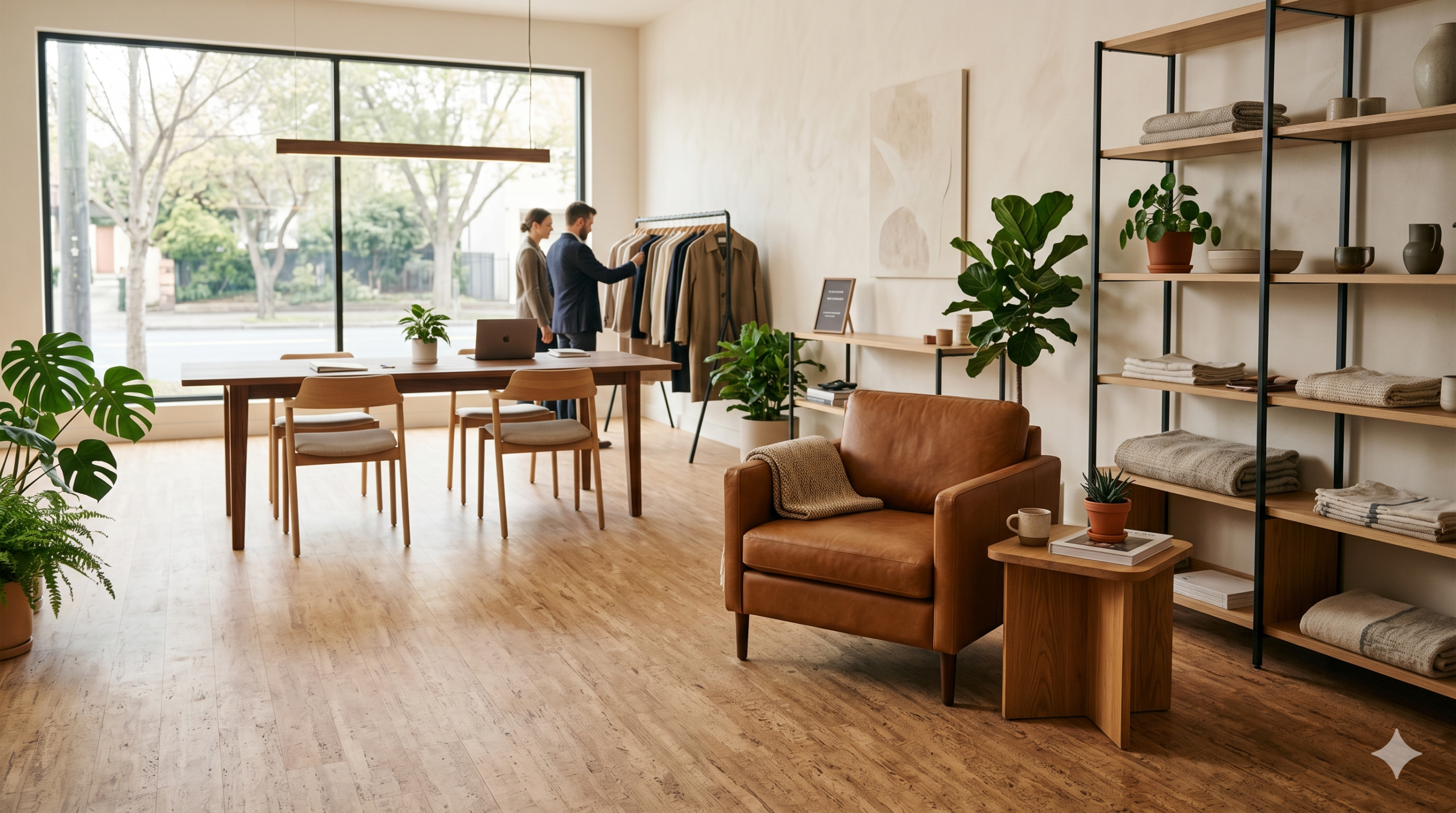
Cork may be a good fit for offices, studios, wellness spaces, counselling rooms, boutique retail, or creative workspaces where atmosphere matters. It is less likely to be the best choice for restaurants, wet service areas, busy corridors, or spaces with rolling equipment.
Where Cork Flooring Needs a Reality Check
Cork has real strengths, but it also has limits. This is where flooring advice needs to be honest.
Moisture is the big one
Cork flooring is not usually the first choice for bathrooms, laundry rooms, wet entryways, or spaces where standing water is likely. Some products have protective finishes, but cork is not the same as waterproof vinyl plank or tile.
If a room regularly deals with wet boots, pet bowls, plumbing surprises, or puddles, cork may not be the best fit.
Pets can be a factor
Cork can be comfortable for pets, but sharp claws may scratch softer flooring surfaces. This does not automatically rule cork out for pet owners, but product selection and maintenance matter.
If the hallway doubles as a dog racetrack, choose carefully.
Sunlight exposure matters
Many Okanagan homes have large windows, bright rooms, and plenty of natural light. Great for lifestyle. Not always great for flooring.
Cork, like many natural materials, can fade with prolonged direct sunlight. Some flooring care guidance also recommends maintaining stable indoor humidity to reduce movement, gaps, or expansion.
Window coverings, UV protection, and product selection can help, but this should be part of the conversation before installation.
Cork Flooring vs Vinyl, Laminate, Hardwood, and Tile
Cork flooring is easiest to understand when compared with the materials people already know.
Cork vs vinyl plank
Vinyl plank is often the practical choice for busy households, rental suites, basements, and moisture-prone areas. It is durable, water-resistant, and easy to clean.
Cork is usually warmer, quieter, and softer underfoot. It is better suited to dry spaces where comfort and sound control matter more than water resistance.
Choose cork when: comfort, warmth, sustainability, and quiet are priorities.
Choose vinyl plank when: moisture resistance, durability, and easy cleaning are the top concerns.
Cork vs laminate
Laminate can offer a wood-look style at a practical price point and is often used in living areas, bedrooms, and renovation projects.
Cork feels softer and typically performs better for sound absorption. Laminate may be better when scratch resistance, budget, or a traditional wood-look finish is the priority.
Choose cork when: the room needs a softer, quieter floor.
Choose laminate when: you want a durable wood-look floor at a practical price.
Cork vs hardwood
Hardwood has a classic look, strong design appeal, and long-term refinishing potential.
Cork offers a different kind of warmth. It feels softer, quieter, and more casual. It does not have the same premium resale perception as hardwood, but it may be more comfortable in everyday use.
Choose cork when: comfort and sound control matter most.
Choose hardwood when: natural wood beauty and refinishing potential are priorities.
Cork vs tile
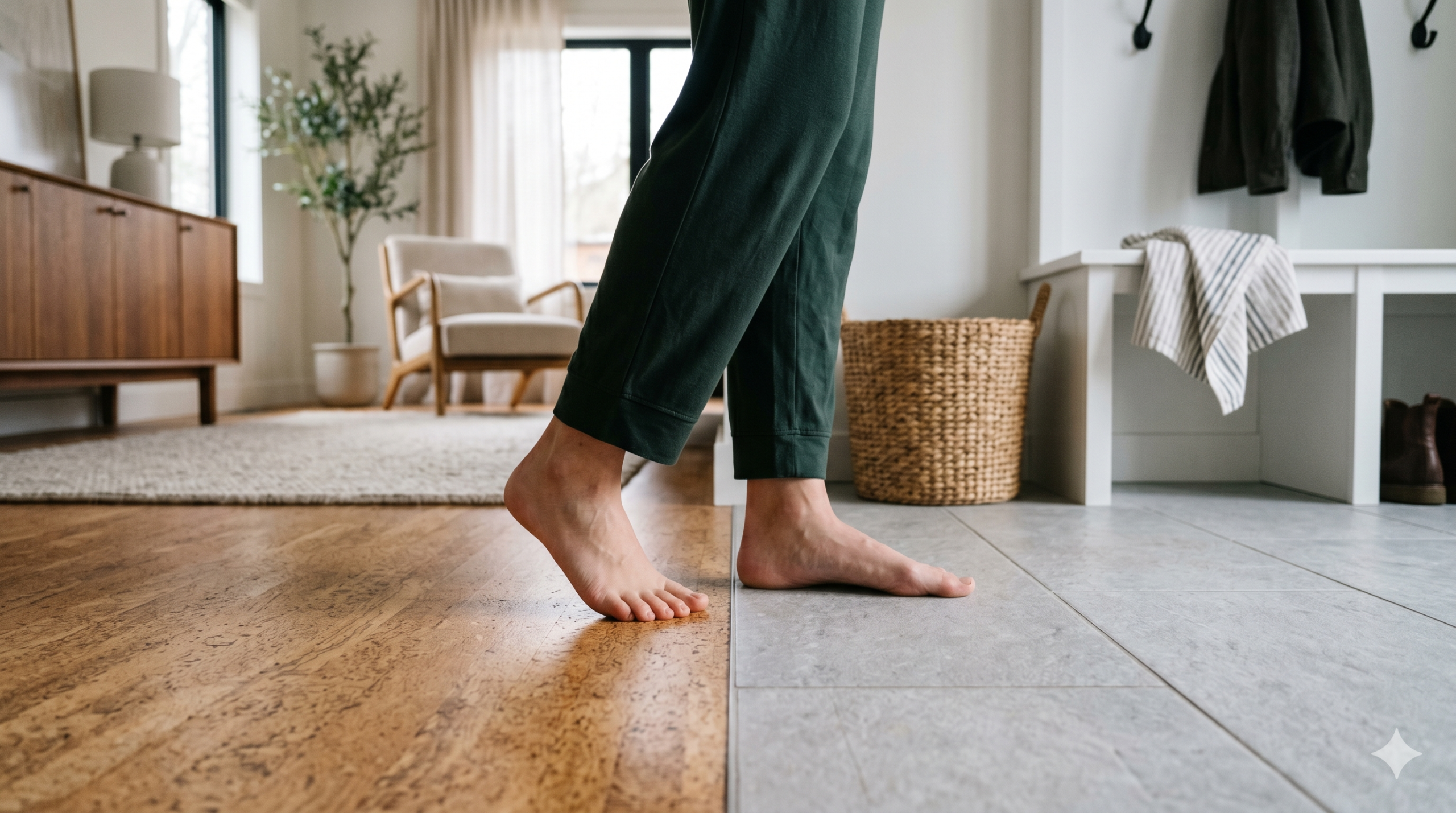
Tile is hard to beat in bathrooms, laundry rooms, mudrooms, and wet areas. It is durable, water-resistant, and easy to clean.
Cork is warmer and more forgiving underfoot, but it is not the better choice for wet rooms.
Choose cork when: the space is dry and comfort matters.
Choose tile when: water resistance and heavy-duty performance matter most.
What Affects Cork Flooring Cost and Value?
Cork flooring cost depends on the product, thickness, finish, installation method, subfloor condition, room size, and preparation required.
The product price is only one part of the full project. Installation, floor prep, old flooring removal, trims, transitions, stairs, waste factor, and layout complexity can all affect the final cost.
This is why comparing flooring based only on square-foot pricing can be misleading.
Cork offers the best value when it is chosen for the right reason. If the priority is a waterproof floor for a rental suite entryway, cork probably is not the strongest investment. If the priority is a warm, quiet, comfortable floor for a home office, bedroom, studio, or boutique workspace, cork may be worth considering.
Is Cork Flooring Right for Your Space?
The real question is not “Is cork flooring good?” It is “Is cork flooring good for this space?”
Cork may be a good fit if you want:
- A warmer floor than tile, laminate, or some vinyl products
- Better sound absorption
- A softer feel underfoot
- A more natural material story
- A flooring option with sustainability appeal
- A comfortable floor for a bedroom, office, studio, or quiet living area
Cork may not be ideal if the space has:
- Frequent moisture or standing water
- Heavy commercial traffic
- Large dogs with sharp claws
- Rolling equipment or heavy furniture movement
- Intense direct sunlight
- Strict cleaning requirements
- A need for maximum scratch or impact resistance
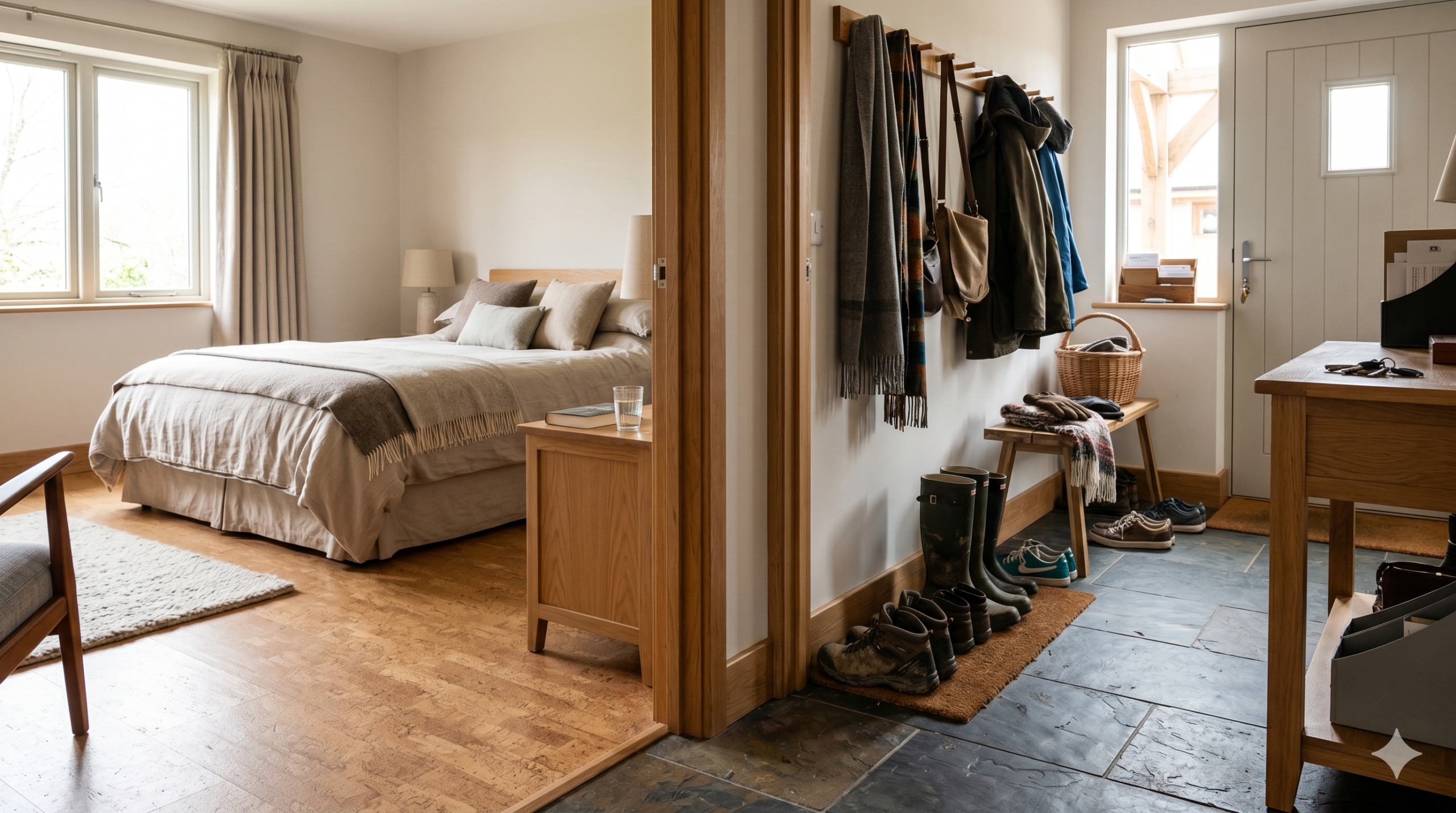
A floor that works beautifully in a quiet bedroom may be the wrong choice for a busy entryway. The right flooring should fit the room, not just the sample board.
How Kelowna Floors Can Help
Cork flooring is one of those products that benefits from a real conversation. Online research can help, but it does not always show how a product feels underfoot, how it compares to other materials, or whether it is right for a specific home or commercial space.
Kelowna Floors helps homeowners, builders, renovators, designers, property managers, and business owners compare flooring options based on how the space will actually be used.
That might mean cork flooring. It might mean vinyl plank, laminate, hardwood, tile, carpet, or another commercial flooring product. The goal is not to force one material into every room. The goal is to choose a floor that fits the space, budget, design, and long-term expectations.
FAQ: Cork Flooring in the Okanagan
Is cork flooring environmentally friendly?
Cork flooring can be an environmentally friendly flooring option because it is made from the bark of cork oak trees, which can be harvested without cutting down the tree. Its sustainability also depends on the specific product, finish, adhesive, transportation, lifespan, and certifications. For the best result, look at both the material story and how well the product fits the room.
Is cork flooring waterproof?
Cork flooring is not usually considered waterproof. Some cork products have protective finishes that improve moisture resistance, but standing water, leaks, and wet seams can still cause problems. For bathrooms, laundry rooms, and wet entryways, tile or waterproof vinyl plank may be a safer choice.
Is cork flooring better than vinyl plank?
Cork flooring is better than vinyl plank when comfort, warmth, sustainability, and sound control are the main priorities. Vinyl plank is usually better when water resistance, scratch resistance, and easy cleaning matter most. In many Okanagan homes, cork makes more sense for bedrooms and offices, while vinyl plank may be better for basements, rentals, and busy entryways.
Does cork flooring scratch or dent?
Cork is softer than tile, hardwood, and many vinyl products, so it can scratch or dent under sharp pressure, heavy furniture, pet claws, or rolling chairs. Furniture pads, chair mats, regular cleaning, and the right finish can help protect it. For very rough-use areas, a harder-wearing flooring option may be better.
Can cork flooring be installed in a basement?
Cork flooring may work in some finished basements, but moisture conditions need to be reviewed first. If the basement has humidity issues, past water damage, or risk of seepage, cork may not be the best choice. A flooring specialist can help compare cork against vinyl plank, laminate, carpet, or tile for the space.
How long does cork flooring last?
Cork flooring lifespan depends on product quality, installation, finish, traffic level, and maintenance. In the right room, with proper care, cork can be a long-lasting flooring option. In the wrong space, especially where moisture or heavy wear is constant, it may show damage sooner than more durable materials.
Planning a renovation, new build, commercial project, or flooring update? Visit the Kelowna Floors showroom to compare cork flooring with vinyl plank, laminate, hardwood, tile, carpet, and other practical options for Okanagan homes and businesses.
The Kelowna Floors team can help you choose flooring that fits your space, budget, style, sustainability goals, and long-term needs.
* Images are AI-generated or sourced from stock to visually explore the concepts and creative possibilities discussed in this article.


